Holiday park finance explained
Holiday park finance is the set of funding products used to buy, develop, improve and refinance holiday and caravan parks in the UK. There is no single product,
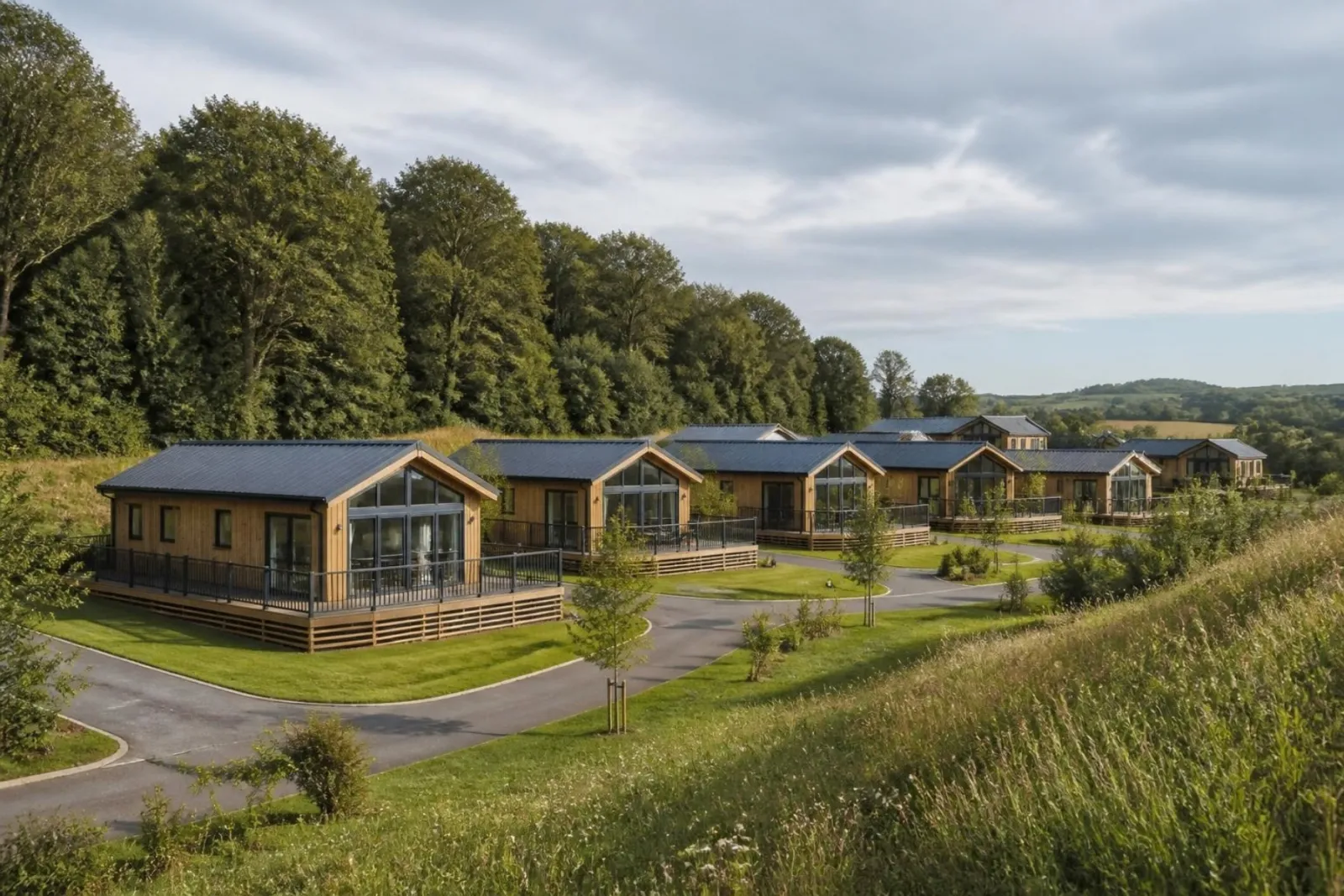

Holiday park finance is the set of funding products used to buy, develop, improve and refinance holiday and caravan parks in the UK. There is no single product, because acquiring a trading static park, developing new lodges or glamping, funding caravan stock, and refinancing a stabilised park all need different facilities. Parks are financed as trading businesses, on their EBITDA, pitch-fee income, site licence and tenure, not on a residential loan to value, and understanding which product fits which deal is what separates a smooth purchase from a stalled one.
This guide explains the main products: park acquisition mortgages, bridging, development and stock finance, and refinance, how lenders size loans against park earnings, and how to choose between them. We arrange all of these as a broker and introducer across specialist leisure and commercial lenders. We are not a lender, and this is general information rather than advice.
Park acquisition mortgages
The workhorse of the sector is the park acquisition mortgage, a commercial term loan secured against the park and used to fund the purchase or refinance of a trading holiday park. Its defining feature is the earnings assessment: rather than a residential loan to value, the lender sizes the loan on the park's sustainable EBITDA and the strength of the asset, including its tenure, site licence, location and the durability of its pitch-fee income, and checks that the earnings cover the payments with a comfortable margin under a stressed interest rate.
These mortgages typically lend to around 50 to 65 per cent of value over a term of 15 to 25 years, so a deposit and equity contribution of roughly 35 to 50 per cent is the planning assumption. Lenders favour freehold or long leasehold parks with durable recurring income, a long open season and, ideally, experienced management. They are available on personal and limited company or special purpose vehicle ownership, usually with personal guarantees from directors. Our how to buy a holiday park guide and our park acquisition finance pages cover the detail, and the commercial mortgage calculator on this site gives a starting estimate.
Bridging finance for parks
Bridging is short-term, flexible finance used when a term mortgage does not fit the situation on day one. The common cases in parks are a purchase that must complete fast, a distressed or off-market opportunity where speed secures the deal, a park needing work or repositioning before it can be refinanced on its stabilised earnings, or a situation where the accounts do not yet support a term lend. A bridge completes the deal, and the borrower exits onto a park acquisition mortgage once the park is stabilised and the earnings are evidenced, or by selling.
Bridging is faster and more flexible than a term mortgage but more expensive, with interest charged monthly from around 0.75 per cent a month and arrangement costs, so it only makes sense where there is a clear, evidenced exit. It is a tool for a transition, not a long-term hold. The key to bridging well is planning the exit before drawing the loan, which is why we arrange the bridge and the exit mortgage together. Our bridging versus park mortgage guide compares the two in detail, and our park bridging finance pages set out the product.
Development and stock finance
Growth on a park is funded differently from acquisition. Developing new static pitches, building lodges, or creating a glamping offer is funded with development finance, which releases money in stages against the build cost and the projected end value and income of the finished pitches or units, and is then refinanced onto a term facility once trading. Larger conversion and infrastructure projects follow the same logic, sized against cost and end value. This is how a park adds the pitches that generate new pitch-fee income and sales margin.
Stock finance is the other park-specific facility. A static park that sells holiday homes has to buy the caravans and lodges before it sells them on at a margin, which ties up substantial capital, so stocking finance funds the inventory of units held for sale, repaid as each unit is sold and sited. This keeps the sales engine turning without absorbing all the operator's working capital. Larger glamping and lodge development can run through our glamping and lodge development finance, and bigger schemes through our colleagues at Commercial Property Development Finance. We arrange across the range and match the facility to the project.
Refinance and portfolio finance
Once a park has a trading record under your ownership, refinancing becomes a powerful tool. Refinancing onto better terms can cut the cost of debt once the earnings are proven, and refinancing to release equity can free capital tied up in a park to fund development or the next acquisition, which is how many operators grow without selling. A common journey is to buy, often with a bridge, stabilise and improve the earnings, then refinance onto a term park mortgage and draw out equity for the next deal.
Operators with several parks can move from financing each individually to portfolio finance, which treats the parks as a single facility, can simplify administration and sometimes improves terms. The right structure depends on the size and mix of the portfolio and whether it is held personally or through a company. We arrange refinance and portfolio facilities alongside acquisition finance, through our park refinance and park portfolio finance services, so an operator can plan the whole funding journey rather than treating each deal in isolation.
How do you choose the right product?
Match the product to the deal and the stage. A trading park you can buy on its current earnings suits a park acquisition mortgage. A fast, distressed or repositioning purchase suits bridging, with a refinance onto a term mortgage as the exit. New pitches, lodges or glamping suit development finance against cost and end value. A sales-active static park needs stock finance for its caravan inventory. A stabilised park with a record suits a refinance, and a group of parks suits portfolio finance.
Getting this right from the outset saves time and money, because applying for the wrong product, or to the wrong lender, slows everything down. A common mistake is to approach a high street bank for a trading park it will never lend on as a commercial asset, lose weeks, and only then look at the specialist leisure lenders that would have engaged on day one. As a broker we start with the deal and the exit, then choose the product and the lender to fit, and we can issue terms in principle before you commit, which strengthens your position with sellers and agents. We keep the exit in view from the start, so a bridge is only arranged where a term refinance is genuinely fundable, and a development facility only where the finished scheme will support the debt that replaces it. We arrange the full stack across specialist leisure and commercial lenders as an introducer and broker, not a lender.
Holiday park finance explained: common questions
What finance do I need to buy a holiday park?
For a trading park you can buy on its current earnings, a park acquisition mortgage, sized on EBITDA at around 50 to 65 per cent loan to value over 15 to 25 years. If the purchase has to complete fast, is distressed, or needs repositioning before it can be refinanced, a bridging loan can complete it, with a refinance onto a term mortgage once stabilised. We arrange both.
How do lenders decide how much to lend on a park?
They size the loan on the park's sustainable, adjusted EBITDA and the strength of the asset, checking the earnings cover the payments under a stressed interest rate, then lend against the lower of that and a loan to value of around 50 to 65 per cent. Durable recurring pitch-fee income, good tenure and a long season support more borrowing; cyclical earnings or weak tenure cap it.
Can I finance a holiday park through a limited company?
Yes. Lending to a park-owning company or special purpose vehicle is well established, usually with personal guarantees from the directors, and is common in the sector. Whether company ownership suits you is a tax and structuring decision for your accountant. We arrange the finance once the structure is chosen.
What is stock finance on a holiday park?
Stock or stocking finance funds the static caravans and lodges a park buys to sell on sited at a margin, before they are sold. It frees the operator's working capital so the sales engine keeps turning, and is repaid as each unit is sold and sited. It sits alongside the acquisition mortgage and any development facility. We can arrange it as part of the funding package.
Ready to talk about a real deal?
Send us the deal and we will come back with a view on fundability and likely terms within one working day.