Finance for static caravan and holiday-home parks
Static caravan and holiday-home parks are commercial trading businesses, and lenders treat them that way. We arrange funding shaped around pitch-fee income, holiday-home sales margin and the strength of your site licence and planning consent.
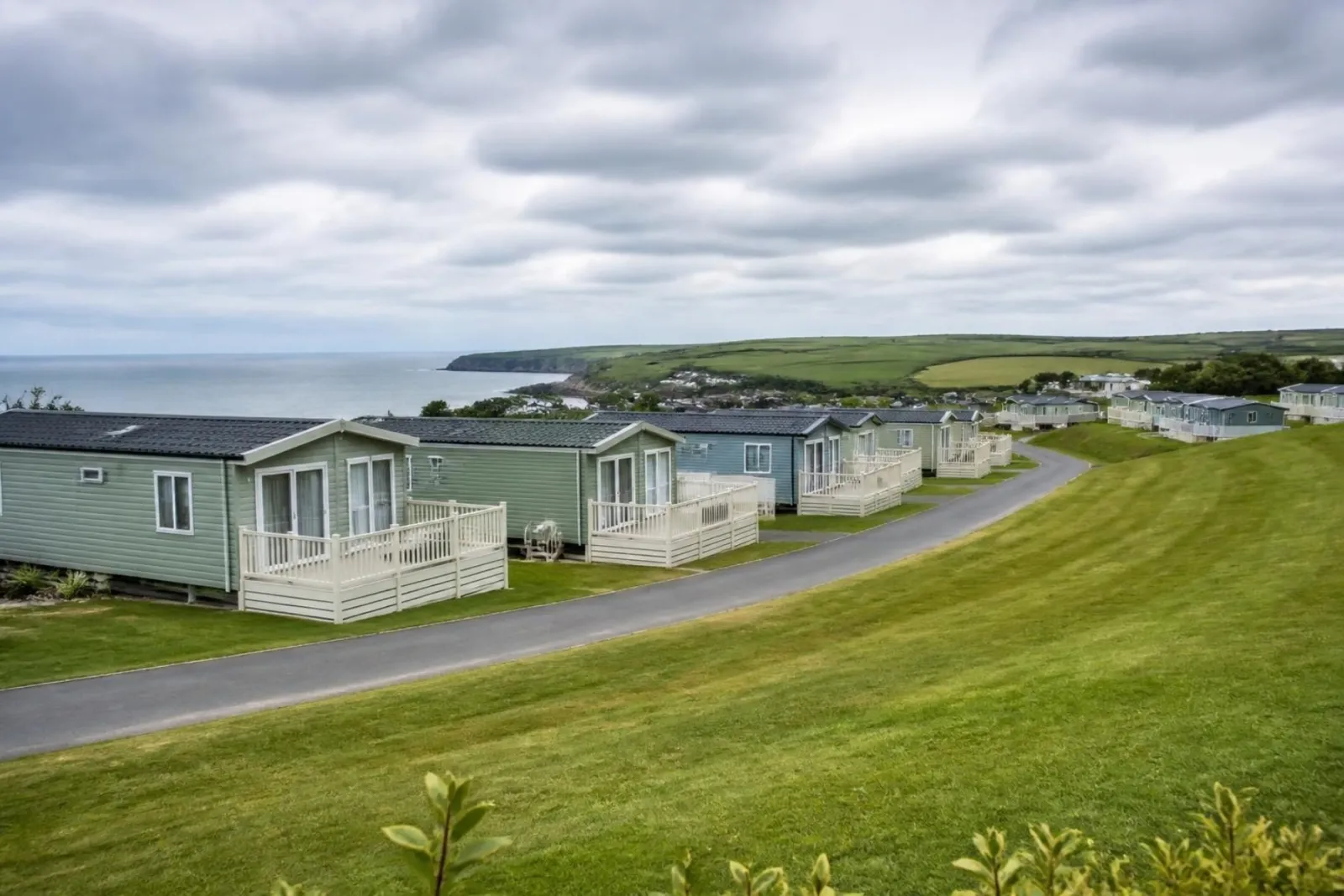

Funding static / holiday-home parks
A static caravan and holiday-home park earns its money from several streams at once, and a lender needs to understand all of them before it will quote. Owner-occupiers buy a static caravan or holiday home and site it on a pitch under a licence, paying an annual pitch or site fee that gives a predictable, recurring income base. Many parks also run a hire fleet of their own caravans for short holiday lets. The income that usually drives profit, though, is the margin on new and used holiday-home sales, where the park acts as a dealer siting units onto vacant or surrendered pitches. Add commission on insurance, finance and connected services and you have a business that is part property, part retail and part hospitality. Because of that mix, lenders assess the park on its EBITDA and trading record rather than on a residential loan-to-value calculation.
Scale across the sector is significant. Industry figures point to roughly 6,200 holiday parks in the UK with around 440,000 pitches, of which about 221,000 are owner-occupied holiday caravan pitches (UKCCA, Pitching the Value 2024). For a buyer or existing owner, the practical consequence is that funding hinges on three documents as much as on the numbers: the caravan-site licence and its term, the planning consent and the holiday-use and season-length conditions attached to it, and the tenure of the land itself. A long, clean licence on freehold land with a settled trading history is far easier to fund than a short-dated or restricted consent. We package those documents alongside accounts so a lender can see the EBITDA, the pitch-fee base and the sales margin clearly, and we then introduce the file to lenders who understand the model. We are arrangers, not lenders, and we do not give financial, legal or tax advice.
What we fund
- Owner-occupier static caravan parks
- Mixed sites with a hire fleet
- Holiday-home sales-led parks
- Coastal and seaside static parks
- Multi-park static portfolios
Indicative terms
- Typical lot sizecirca £750,000 to £15m and above
- Loan to valuecirca 50% to 65%
- Termup to 20 to 25 years
- Rateindicative, priced on EBITDA and risk
Indicative only. Terms vary by lender, asset and borrower and are not an offer of finance.
How do lenders size a loan against a static caravan park?
Lenders start with adjusted EBITDA, not the bricks and mortar. They take the trading accounts, strip out one-off items and owner remuneration where appropriate, and test whether the normalised cash flow comfortably services the proposed debt. Pitch-fee income is valued highly because it is contractual and recurring, while holiday-home sales margin is real but lumpier, so a cautious lender may discount it. Loan to value usually lands around 50% to 65% of a market value derived from that earnings stream rather than a simple land valuation. The site licence term, planning consent, season length and tenure all feed directly into both the valuation and the loan term, since a lender will rarely lend long against a short or restricted consent. We assemble the file so these points are evidenced up front. Figures are indicative and not an offer of finance.
Which lenders fund static and holiday-home parks?
Static caravan parks sit firmly in specialist commercial and leisure lending, so the right home is rarely a high-street current-account provider. The active market is a mix of clearing-bank leisure teams, challenger and regional banks, and specialist commercial lenders who understand pitch-fee businesses and holiday-home sales. Each has its own appetite: some prefer established, well-tenured sites with a long sales record, others will look at lighter trading histories or turnaround stories at lower leverage. Because appetite varies so much by licence term, location and the quality of the consent, presenting the same file to the wrong desk wastes time and can dent later applications. As an arranger and introducer, we match the park to lenders whose criteria fit, then manage the conversation through to terms. We do not lend ourselves and we do not give financial, legal or tax advice. Any indication of terms is illustrative and not an offer of finance.
What does the exit look like?
For most static parks the realistic exit is the trading business itself, either through continued operation servicing a long-term commercial mortgage or through an onward sale to another operator. Park values are driven by sustainable earnings, so a buyer is acquiring the pitch-fee base, the sales pipeline and the goodwill rather than a parcel of land. Where funding has been used for acquisition or improvement, lenders look for either a clear refinance route onto longer-term debt once trading is proven, or a sale at a level that comfortably clears the facility. We map the intended exit at the outset and keep it credible against the season, the consent and the wider market. This is general information, not advice, and any figures are indicative and not an offer of finance.
Finance that suits this asset class
- Holiday park & caravan park mortgagesThe core route for buying an established static park, with the loan sized against EBITDA and pitch-fee income.
- Holiday park refinance & equity releaseUsed to move off legacy or expensive debt and to release equity from a proven trading park for reinvestment.
- Leisure & trading-business park mortgagesSuits static parks viewed primarily as going-concern leisure businesses where income and goodwill drive value.
Useful calculators
Related guides
Fund a static / holiday-home parks deal
A view on fundability within one working day.
Why static parks are funded on income, not land value
It is tempting to think of a caravan park as a field with units on it, but a lender does not value it that way. The land may have limited alternative use under a holiday-only consent, so its worth is tied to the trade it supports. That is why funding decisions start with EBITDA and the durability of the income, and why two parks of the same acreage can attract very different offers. A site with a long pitch-fee tail, a steady sales record and a clean licence presents as a stable trading business. A site with a short consent, churning occupancy or a thin sales history presents as risk, and the loan to value falls accordingly.
For owners, the takeaway is practical. The figures that move a lender are occupancy and renewal rates on pitches, the volume and margin of holiday-home sales, and the proportion of income that is genuinely recurring. Tidy, reconciled management accounts that separate these streams are worth more in a funding conversation than any amount of narrative. We help owners present that picture so the underlying quality of the business is visible to the desks most likely to support it. None of this is advice, and all figures are indicative and not an offer of finance.
The site licence and planning consent
The caravan-site licence is the document that lets the park operate, and its term and conditions sit at the heart of any funding decision. A licence with a long unexpired term gives a lender comfort that the income can continue across the life of a loan, while a short or conditional licence narrows both the amount and the term on offer. Planning consent matters just as much: whether use is holiday-only, what the permitted season length is, and whether occupancy conditions restrict who can stay and when. These conditions shape the income calendar and therefore the serviceability calculation.
We always ask for the licence and the consent early, because surprises here derail deals late in the day. Where a consent is restrictive, there may be scope to evidence a strong trading record within those limits, or to explore variations separately with planning advisers. What we do not do is assume a consent says what an owner believes it says; we work from the documents. Lenders take the same view, so getting this right at the outset saves weeks. This is information only, not legal or planning advice, and any terms indicated are not an offer of finance.
Holiday-home sales as the profit engine
On many static parks, the largest single contributor to profit is not pitch fees but the margin earned reselling new and used holiday homes onto pitches. The park buys units, sites them and sells them to incoming owners, capturing both a sales margin and a fresh stream of pitch fees from the new occupier. A healthy sales operation therefore feeds the recurring income base as well as generating one-off profit, which is why lenders pay close attention to the sales record. Volume, average margin and the age profile of the resident fleet all tell a story about how sustainable that engine is.
Because sales income is more variable than pitch fees, a prudent lender may apply a discount when sizing debt against it, valuing the contractual pitch-fee base more highly. That is not a reason to understate sales; it is a reason to evidence them clearly across several years so a lender can see a trend rather than a single good period. We help owners present sales history in a way that distinguishes underlying performance from one-off spikes. As ever, this is general information rather than advice, and any figures shown are indicative and not an offer of finance.
Tax changes affecting unit owners who let
A change worth flagging for parks whose residents let their holiday homes is the abolition of the Furnished Holiday Lettings tax regime from April 2025 (HMRC and gov.uk). The FHL rules previously gave qualifying short-let holiday accommodation a more favourable tax treatment than ordinary lettings, and individual unit owners who let their caravans or lodges may have relied on them. With the regime removed, the tax position of those individual lettings changes, which can affect how attractive ownership-for-let looks to some buyers.
For a park operator, this is context rather than a direct funding factor, but it can influence the sales market and the profile of incoming owners, both of which feed the trading numbers a lender reviews. We are not tax advisers and we do not give tax advice; owners and prospective buyers should take their own professional advice on how the change affects them. We mention it only so the funding conversation reflects current conditions. Any figures here remain indicative and are not an offer of finance.
Borrowing structure and ownership
Most static parks are funded as unregulated commercial lending, which gives flexibility on structure that residential mortgages do not. It is common to hold and borrow through a limited company or a special purpose vehicle, which can suit how owners manage the business, plan succession and ring-fence individual sites within a wider group. Lenders are comfortable lending to corporate borrowers provided directors give the usual support and the trading covenant is clear. The choice of structure has tax and legal consequences that sit outside our remit, so it should be taken with proper advice.
Because the lending is commercial and the asset is a trading business, personal guarantees, debentures and charges over the company are normal features rather than red flags. We make sure owners understand what a lender is likely to ask for before terms are issued, so there are no surprises at offer stage. Our role is to arrange and introduce, matching the structure the owner has chosen to lenders who can work with it. We do not give financial, legal or tax advice, and any indication of terms is illustrative and not an offer of finance.
Worked example: refinancing an established static park
Imagine an established coastal static park with around 180 owner-occupied pitches, a small hire fleet and a steady holiday-home sales operation, held in a limited company on freehold land with a long site licence and a holiday-only consent. The owners want to clear an expensive legacy facility and release modest equity for a new amenity block.
A lender reviews three years of accounts, normalises EBITDA to strip out one-off costs, and values the business on that sustainable earnings figure. With a long licence, freehold tenure and a clean trading record, a facility around 55% to 60% loan to value over a 20-year term might be discussed, priced on the risk profile, with the pitch-fee base treated as the core serviceable income and sales margin supporting headroom.
This is illustrative only, not an offer of finance, and not advice; actual terms depend on the lender, the park and full underwriting.
Illustrative worked example only. Figures vary by lender, asset and borrower and are not an offer of finance.
Frequently asked questions
How much can I borrow against a static caravan park?
Borrowing is driven by sustainable EBITDA rather than land value, with loan to value typically around 50% to 65% of an earnings-based market value. Lenders weigh the recurring pitch-fee base most heavily, treat holiday-home sales margin as supporting income, and look closely at the site licence term, planning consent and tenure when deciding both the amount and the term. A long, clean licence on freehold land with a settled trading record supports more generous terms than a short or restricted consent. We help present the numbers and documents so the right lenders can assess the file. These figures are indicative and not an offer of finance.
Why do lenders focus so much on the site licence and planning consent?
Because they define whether and how the park can keep trading across the life of a loan. The caravan-site licence permits operation, and its unexpired term tells a lender how long the income can run. The planning consent sets whether use is holiday-only, the permitted season length and any occupancy conditions, all of which shape the income calendar and serviceability. A short licence or a restrictive consent narrows the amount and term on offer, while a long, clean position supports stronger funding. We gather these documents early so issues surface at the start, not at offer stage. This is information only, not legal or planning advice.
Can I borrow through a limited company or SPV?
Yes. Static park lending is usually unregulated commercial finance, and borrowing through a limited company or special purpose vehicle is common. Corporate borrowing can suit how owners manage the business, plan succession and ring-fence individual sites within a group. Lenders are comfortable with company borrowers where directors provide the usual support, such as personal guarantees and a debenture, and the trading covenant is clear. The choice of structure carries tax and legal consequences that fall outside our remit, so it should be made with proper professional advice. We arrange and introduce; we do not give financial, legal or tax advice, and any terms indicated are not an offer of finance.
Does the end of the Furnished Holiday Lettings regime affect park finance?
The Furnished Holiday Lettings tax regime was abolished from April 2025 (HMRC and gov.uk). That change mainly affects individual unit owners who let their caravans or holiday homes, rather than the park operator directly. For an operator it is context: it can influence the sales market and the profile of incoming buyers, both of which feed the trading numbers a lender reviews. It does not change the core funding approach, which remains EBITDA-led. We are not tax advisers and do not give tax advice; owners and buyers should take their own advice on their position. Any figures we provide remain indicative and not an offer of finance.
Funding a static / holiday-home parks asset?
Tell us about the deal and we will come back with a view on fundability and likely terms.