Glamping and lodge development finance for new and expanding parks
Building a luxury lodge park or a glamping site is a development project before it is a trading business. We arrange staged development funding against cost and end value, with drawdowns that track construction and an exit planned from day one.
What is glamping and lodge development finance?
Glamping and lodge development finance is project funding for building or expanding a holiday park, drawn in stages as the work progresses rather than as a single lump sum. We arrange it for operators creating a new lodge or glamping destination and for existing parks adding pitches, infrastructure and high-spec accommodation. The funding is sized against the cost to complete and the gross development value, the end value of the finished, trading or sellable park, with the lender advancing a percentage of cost and capping total exposure against that end value. Staged drawdowns are released as monitored milestones are met, so you are only paying for capital as you put it to work on site.
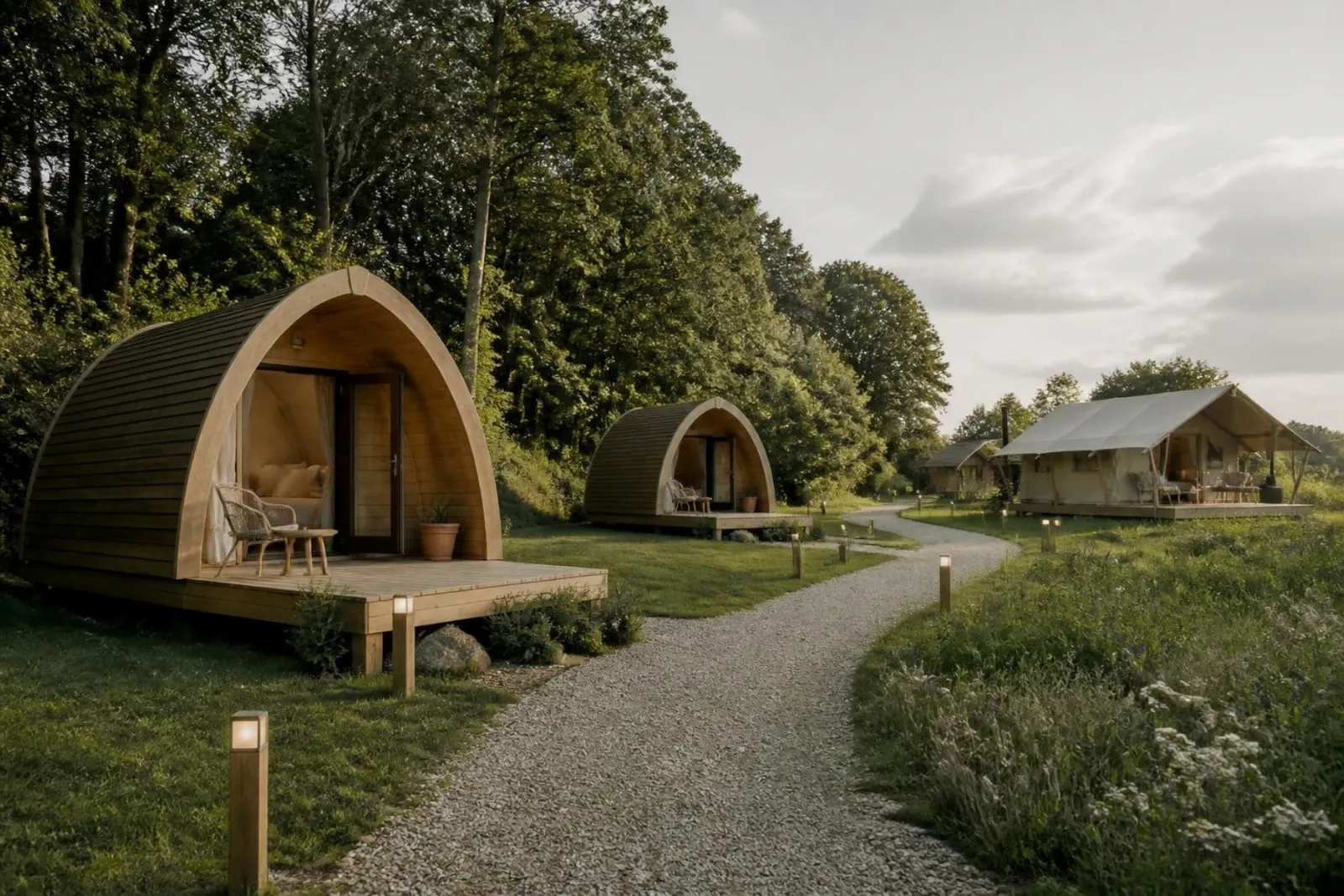
These projects sit on planning consent and a caravan or holiday-site licence, and lenders treat both as fundamental. Luxury lodges retail upwards of a hundred and fifty thousand pounds each on industry buyer guides, so the build cost and the eventual value per pitch can be substantial, and the funding has to reflect groundworks, services, roads, drainage and amenity buildings as well as the units themselves. Whether you are placing safari tents, pods, cabins, treehouses or shepherd's huts, or installing full lodge bases, the structure flexes around your phasing. Development debt prices higher than long-term park lending because it carries construction risk, and we make that trade-off clear up front.
Key features
- Funding against cost and gross development value
- Staged drawdowns tracking construction milestones
- Planning consent and site licence central to the deal
- Exit via park mortgage or unit sales
Indicative terms
- Loan sizeFrom around £250k to £10m and above per scheme
- Loan to valueUp to around 65% of cost, capped on gross development value (indicative)
- Term12 to 30 months during the build
- RateHigher than term debt; bridging from around 0.75% per month (indicative)
- RepaymentInterest rolled up or from a reserve, capital on exit
- Arrangement feeAround 1% to 2%, often with an exit fee, indicative
Indicative only. Terms vary by lender, scheme and borrower and are not an offer of finance.
Who it suits
- Developers creating a new lodge or glamping park
- Operators adding a phase of pitches or units
- Owners upgrading from touring to high-spec lodges
Related guides
Discuss glamping & lodge development finance
A view on fundability within one working day.
What can development finance fund on a park?
It funds the whole build, not just the visible accommodation. On a glamping or lodge scheme the cost base runs from site clearance and groundworks through roads, parking, drainage, water, power and broadband to the amenity buildings, reception, washblocks and any food and beverage offer, and finally the units themselves, whether those are timber lodges on permanent bases or safari tents, pods, cabins, treehouses and shepherd's huts. Landscaping and the licence and planning conditions all carry cost, and lenders expect a realistic build budget with contingency rather than an optimistic headline figure.
Funding can cover ground-up creation of a brand-new park or the expansion of an established one, adding a phase of pitches or upgrading from touring to high-spec lodge accommodation. For larger or more complex builds, specialist construction lenders come into play, and our colleagues at Construction Capital arrange that kind of monitored development facility. We work out which lender and which structure suit the scheme, then arrange the introduction and the staged facility around your programme.
How do staged drawdowns work?
Development funding is released in tranches against progress on site rather than all at once. A monitoring surveyor, appointed by the lender, visits at agreed stages and certifies the value of work completed, and each drawdown is released against that certificate up to the agreed percentage of cost. This protects both sides, you only draw and pay interest on capital as you deploy it, and the lender keeps its exposure aligned with the value actually built. Interest is commonly rolled up or serviced from an interest reserve during the build, because the park is not yet trading.
Getting the drawdown schedule right matters. We help you map the facility to your construction programme so cash arrives when contractors and unit suppliers need paying, with enough contingency that a delay in one phase does not stall the whole site. Glamping units and lodges often require deposits to manufacturers, so the schedule has to accommodate procurement as well as on-site spend. These mechanics are indicative and negotiated deal by deal, not an offer of finance, and we set expectations before you commit to a build programme.
Why are planning and the site licence so important?
No serious lender will fund a park build without clarity on planning and the site licence, because those define what you can actually operate and for how many months of the year. Planning consent fixes the number and type of units, the occupancy conditions and any seasonal restriction, while the caravan or holiday-site licence governs the operating standards and the practical capacity of the site. A scheme with full consent and a clean licence position underwrites very differently from one still working through conditions or relying on permitted-development arguments.
Occupancy conditions in particular shape value. A site limited to holiday use for ten or eleven months supports a different end value from one with a tighter season, because the trading income and the resale appeal of the pitches change. Lenders price the planning and licence risk into both the loan to cost and the assumed gross development value. We do not give planning or legal advice, so you should take specialist counsel, but we make sure the funding reflects the consent you genuinely hold rather than the one you hope to secure.
How is the exit structured?
Development debt is short-term and always needs a defined exit, the event that repays it once the build is finished. On a park scheme there are two common routes. The first is to refinance onto a long-term trading-business mortgage once the park is built and producing income, rolling the development facility into a fifteen to twenty-five year term loan sized on the new EBITDA. The second is unit sales, where lodges are sold to holiday-home buyers and the sale proceeds clear the facility, often phase by phase as a development releases.
Many parks use a blend, selling a proportion of lodges to recover capital while retaining pitches for hire fleet and pitch-fee income, then refinancing the retained estate. The lender wants to see that exit evidenced before it lends, through a credible sales strategy or an in-principle term-loan appetite, because a development facility with no exit is a facility in trouble. We plan the exit alongside the build funding, so the day the last unit lands you already know how the debt is repaid. This is indicative and not an offer of finance.
What does it cost compared with term lending?
Development finance prices above a standard park mortgage because it carries construction and completion risk, which a finished, trading park does not. Expect a higher margin, a monitoring surveyor's fee, and an arrangement fee plus often an exit fee on redemption. Where speed matters, for example to secure a site or to bridge a gap before the development facility completes, short bridging finance is available from around nought point seven five per cent a month. The all-in cost over a build is higher than long-term debt, which is exactly why a clean, prompt exit matters so much.
We help you model the true cost of the build money, including rolled-up interest, fees and the monitoring regime, against the value the finished park creates. The gap between development pricing and the long-term mortgage rate is the prize for refinancing promptly once the park is trading. None of this is financial advice, and the numbers here are indicative ranges rather than quotes, but we make sure you go into a build understanding what the funding costs and how the term-debt exit improves the picture.
Worked example: a new lodge park with a phased build
A developer holds a consented site for forty luxury lodges with an eleven-month holiday occupancy condition and a clean site licence. The build, including groundworks, services, amenity building and lodge bases, is costed at around four point eight million pounds, and the finished park has an assessed gross development value near nine million on a mix of unit sales and retained pitches.
We introduce a development lender who advances around sixty-five per cent of cost, roughly three point one million pounds, drawn in stages against a monitoring surveyor's certificates, with interest serviced from a reserve. The programme runs in two phases of twenty lodges. The agreed exit blends lodge sales, which clear the facility phase by phase, with a long-term trading mortgage on the retained pitches once the park is open and producing pitch-fee income.
This is illustrative only, indicative, not an offer of finance, and not financial, legal or tax advice.
Illustrative worked example only. Figures vary by lender, asset and borrower and are not an offer of finance.
Glamping & lodge development finance: common questions
Can I fund glamping units as well as the groundworks?
Yes. A development facility can cover the full cost base, from site clearance, roads, drainage and services through amenity buildings to the units themselves, whether those are timber lodges or glamping pods, safari tents, cabins, treehouses and shepherd's huts. Because manufacturers often want deposits, we help structure the drawdown schedule so procurement and on-site spend are both funded at the right time. The lender advances a percentage of total cost against the gross development value. These arrangements are indicative and negotiated per scheme, not an offer of finance, and every build is underwritten on its own budget and programme.
What deposit or equity do I need to put in?
Most development lenders advance a percentage of cost, commonly up to around sixty-five per cent, capped against the gross development value, so you fund the balance of cost from your own equity or from the land value already held. The stronger your equity contribution and the cleaner the planning and licence position, the better the terms tend to be. Some lenders count consented land value as part of your stake. We help you understand how the loan to cost and loan to gross development value interact. All figures here are indicative only and not an offer of finance.
Do I need full planning before you can arrange funding?
For mainstream development funding, effectively yes. Lenders want to see full planning consent and a clear caravan or holiday-site licence position, because those define how many units you can place, the occupancy conditions and the season. A scheme still working through conditions is much harder to fund and prices accordingly. Where you need to secure a site before consent is finalised, short bridging can sometimes bridge that gap. We do not give planning advice, so please take specialist counsel, but we make sure the funding reflects the consent you actually hold. This is general information, not an offer of finance.
How do I repay a development facility once the park is built?
Through a defined exit, agreed before you draw. The two common routes are refinancing onto a long-term trading-business mortgage once the park is open and producing income, or selling lodges to holiday-home buyers so the sale proceeds clear the facility, often phase by phase. Many parks blend both, selling some units while retaining pitches for hire income, then refinancing the retained estate. Lenders want the exit evidenced up front. We plan it alongside the build funding so repayment is clear from day one. These routes are indicative and not an offer of finance.
Discuss glamping & lodge development finance
Send us your scheme and we will come back with a view on fundability and likely terms within one working day.