Is a holiday park a good investment?
A holiday park is an investment in a trading leisure business rather than a passive property holding. The return comes from recurring pitch fees on sited holida
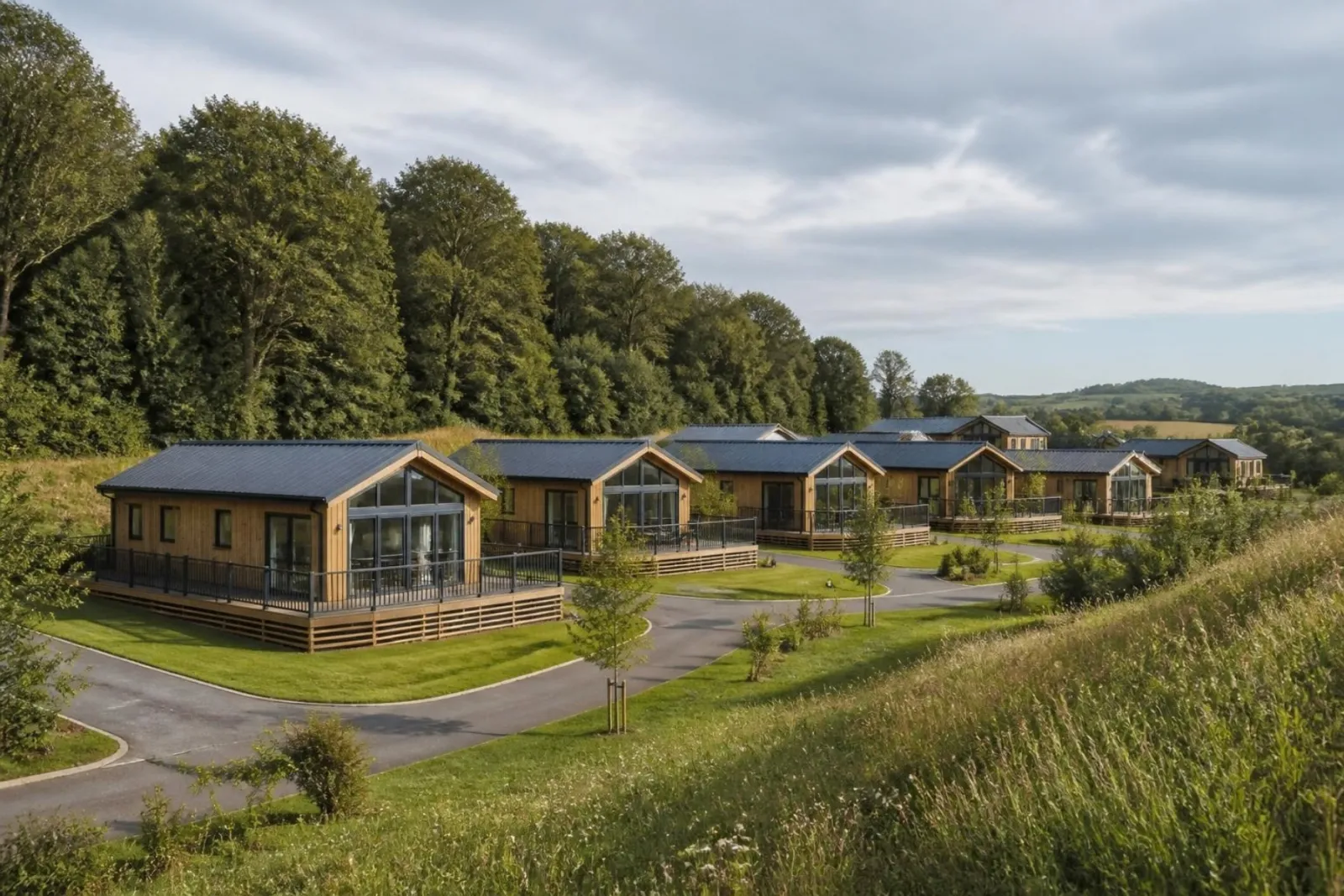

A holiday park is an investment in a trading leisure business rather than a passive property holding. The return comes from recurring pitch fees on sited holiday homes, the margin on selling and siting new static caravans and lodges, touring, camping and glamping income, and ancillary trade such as a clubhouse or shop. That blend of durable recurring income and trading profit is what attracts investors to the sector, and it is also what makes a park more demanding to run and to underwrite than a single let.
The UK holiday park sector has drawn growing investor interest, and the data points to a mature, active market: the UK Caravan and Camping Alliance's Pitching the Value 2024 report counted around 6,200 holiday parks and roughly 440,000 pitches, with high-season pitch occupancy around 68 per cent. This guide weighs the investment case honestly: where the money comes from, the returns and EBITDA multiples, the tenure and the risks, the 2025 tax changes, and how parks are financed. We arrange that finance as a broker and introducer; we are not a lender and we do not give investment, tax or legal advice.
What kind of investment is a holiday park?
A holiday park is a hybrid: part land and property asset, part operating leisure business. The property half gives you a tangible freehold asset and the inflation linkage of land in a desirable location. The business half generates the return, through pitch-fee management, caravan sales, occupancy, cost control and the quality of the on-site offer, and it is the half that does not run itself. Investors who treat a park as passive property tend to underperform; those who treat it as a trading business with a freehold underneath tend to do well.
Compared with a single holiday let or buy to let, a park is a much larger, more diversified and more management-intensive proposition. Its income is spread across many pitches and several revenue lines rather than one tenancy, which gives resilience, but it also carries staff, a site licence, infrastructure and the cyclical business of selling caravans. This is why parks are bought and financed as trading businesses, valued on their EBITDA rather than on a residential loan to value, and why management quality is so central to the return.
How strong is demand for UK holiday parks?
The structural case rests on the durability of the UK staycation and the steady demand for affordable, owned holiday accommodation. The UK Caravan and Camping Alliance's Pitching the Value 2024 report records around 6,200 holiday parks and roughly 440,000 pitches across the UK, with high-season pitch occupancy around 68 per cent, evidence of a large, established sector rather than a speculative one. Holiday-home ownership on a park gives families a low-cost, repeatable holiday, which has proved resilient through changing economic conditions.
Demand is not uniform, though. It concentrates in proven coastal and rural destinations and in parks with the right offer, and it is seasonal, with most parks earning the bulk of their pitch and touring income across the warmer months and many restricted to a holiday season by their licence. The most resilient parks combine a strong location, a twelve-month or long holiday season where the consents allow, a loyal base of holiday-home owners paying recurring fees, and room to grow through caravan sales or new pitches. National demand never guarantees any single park, which is why location, tenure and the income mix matter more than a headline sector statistic.
What income and returns can a holiday park produce?
A park's return is driven by its EBITDA, the earnings before interest, tax, depreciation and amortisation that a buyer and lender work from, and by the multiple at which parks change hands. The income mix matters: recurring pitch fees and service charges are durable and valued highly, while caravan-sales margin can be the largest profit line on a developing park but is more cyclical. Savills' Holiday and Home Park Update 2025 reported operator profit conversion of around 29 per cent in 2024 and an average transaction value of around 34,192 pounds per pitch on holiday static parks, useful benchmarks for sizing a park's value and earnings.
The honest qualification is that turnover is not profit and one year is not a trend. A park advertised on a strong turnover can convert far less to bankable EBITDA once real running costs, stock replacement and infrastructure renewal are accounted for. Returns are best assessed on several years of accounts, separating recurring income from one-off sales, and stress-tested against a season of weaker occupancy or slower caravan sales. Our holiday park yields and EBITDA guide works the calculation through in detail, and the rental yield calculator on this site lets you test your own figures.
Why tenure and the licence shape the investment
Two factors can make or break a park as an investment, and both sit outside the trading accounts. The first is tenure. A freehold park, where the land and the trading right are owned together, is a far stronger and more financeable asset than a park on a short or restrictive lease, where the value can erode as the term shortens. The second is the caravan site licence and planning consent, which control the number and type of units, the siting, and crucially the permitted use and open season. A twelve-month holiday park with headroom to add pitches is worth materially more than one closed for winter or built out, and any residential element brings separate regulated considerations.
These factors feed straight into both value and fundability. A lender and a valuer will weigh the tenure, the licence and the consents as heavily as the earnings, because a park with weak tenure or a restrictive licence is a weaker security whatever its current profit. For the investor, this means the due diligence on the licence and tenure is as important as the financial appraisal. Our caravan site licence guide and our park licensing and rules guide cover these in detail.
What did the 2025 tax changes mean for parks?
From April 2025 the furnished holiday lettings (FHL) tax regime, which gave qualifying self-catering holiday accommodation favourable treatment on finance costs, capital allowances, pension-relevant earnings and certain capital gains reliefs, was abolished. For the park operator's own trading business the direct impact is limited, because a park is taxed as a trade rather than as residential property letting. The change bites more on the holiday-home owners sited on a park, and on any park-owned units let out as holiday accommodation, whose tax treatment has changed.
The practical effect for investors is twofold. Indirectly, the loss of FHL reliefs slightly reduces the tax appeal of owning an individual holiday caravan to let, which is a factor in the demand for sited holiday homes that underpins pitch-fee income, so it is worth understanding. Directly, it reinforces the case for taking proper structuring advice when buying a park, including whether to hold through a limited company. This is genuinely individual and belongs with an accountant. Our FHL tax changes guide explains what changed, and investors weighing corporate structures often speak to our colleagues at Limited Company Property Finance.
What are the main risks investors underestimate?
Seasonality and occupancy come first. Most parks earn unevenly across the year, and a licence that closes the park for winter caps the income, so an over-optimistic occupancy or season assumption is a common reason returns disappoint. Reliance on caravan-sales margin is the next: a park whose profit depends heavily on continuing to sell new statics is exposed to consumer confidence and to running out of development pitches, so the durability of the recurring pitch-fee base matters. Regulatory and licence risk is real, because the site licence, planning and any residential element constrain what the park can do.
Operational risk is chronic: ageing infrastructure, tired stock, weak management, rising energy and staffing costs and poor customer retention erode EBITDA gradually. Tenure risk bites where a lease is short or restrictive. And the property and macro risks common to all real estate apply, including interest-rate movements that affect both debt costs and values. Leverage amplifies every item on this list. None of these is disqualifying, but each belongs in the underwriting, and a lender will expect to see them addressed.
How does financing shape the investment case?
Debt is what turns a park's earnings into a meaningful equity return, and parks are a sector specialist lenders understand, with acquisition mortgages sized on EBITDA and the strength of the asset. Trading parks are funded with these term facilities at around 50 to 65 per cent loan to value over 15 to 25 years; parks needing work, a fast purchase or a distressed situation with bridging until they are stabilised; and new pitches, lodges or glamping with development finance against cost and end value. Refinancing once a park has a trading record under new ownership can release equity to develop or to buy the next park.
Leverage works both ways. Gearing amplifies returns when EBITDA grows and punishes errors when it does not, and the difference between a comfortable facility and a stressful one is usually decided on day one in the sizing. In our experience the well-financed parks share two habits: debt sized so the park covers its payments even if a season disappoints or sales slow, and a funding plan that matches the asset's stage, from acquisition through development to refinance. Our holiday park finance guide sets out the full stack. We arrange it as a broker and introducer, not a lender.
Where does the balance land for UK investors?
The honest summary is that a holiday park is a model containing both excellent and poor investments. In its favour: a large, established sector with around 6,200 parks and 440,000 pitches on the UKCCA's figures, durable recurring pitch-fee income, a tangible freehold asset, and an active transaction market in which Christie and Co reported agreed park and leisure deals tripling in the first half of 2025. Against it: seasonality and licence restrictions, reliance on caravan sales on developing parks, real operational and management demands, tenure and regulatory risk, all magnified by leverage.
The pattern in the deals we finance is consistent: tenure, licence and location decide most outcomes, the durability of recurring income and the quality of management decide the rest, and the investors who succeed underwrite conservatively on evidenced EBITDA rather than on optimistic projections. Whether a holiday park suits your capital and appetite is a decision for you and your advisers. When you have a park worth buying, we arrange the finance that makes it work.
Is a holiday park a good investment?: common questions
Is a holiday park a good investment in 2025 to 2026?
It can be a strong investment, supported by a large, established sector and an active deal market, but it is a trading business, not passive property. Returns depend on tenure, the site licence, location, the durability of pitch-fee income and management quality. Underwrite on several years of evidenced EBITDA rather than headline turnover, and take professional advice before buying.
How do holiday parks make money?
Mainly from recurring annual pitch fees and service charges paid by holiday-home owners, plus the margin on selling and siting new static caravans and lodges, touring, camping and glamping pitch income, and ancillary trade such as a clubhouse, shop or food and drink. The balance between durable recurring income and more cyclical sales margin shapes both value and risk.
What return or yield do holiday parks offer?
Parks are assessed on EBITDA and the multiple at which they sell rather than a simple yield. Savills reported operator profit conversion of around 29 per cent in 2024 and an average transaction value of around 34,192 pounds per pitch on holiday static parks. The actual return depends on the park's income mix, tenure, location and how it is run and financed.
How much money do you need to invest in a holiday park?
Parks are financed commercially at around 50 to 65 per cent loan to value, so you need a deposit and equity contribution of roughly 35 to 50 per cent of value, plus stamp duty or the relevant land tax, legal and professional fees, and working capital to run the business and fund stock. The total capital needed is substantial and well beyond the deposit alone.
Ready to talk about a real deal?
Send us the deal and we will come back with a view on fundability and likely terms within one working day.