Mixed-use holiday park finance
Funding for holiday parks that combine several income streams, sized on the diversified trading earnings the whole operation produces across the season.
Funding mixed-use parks
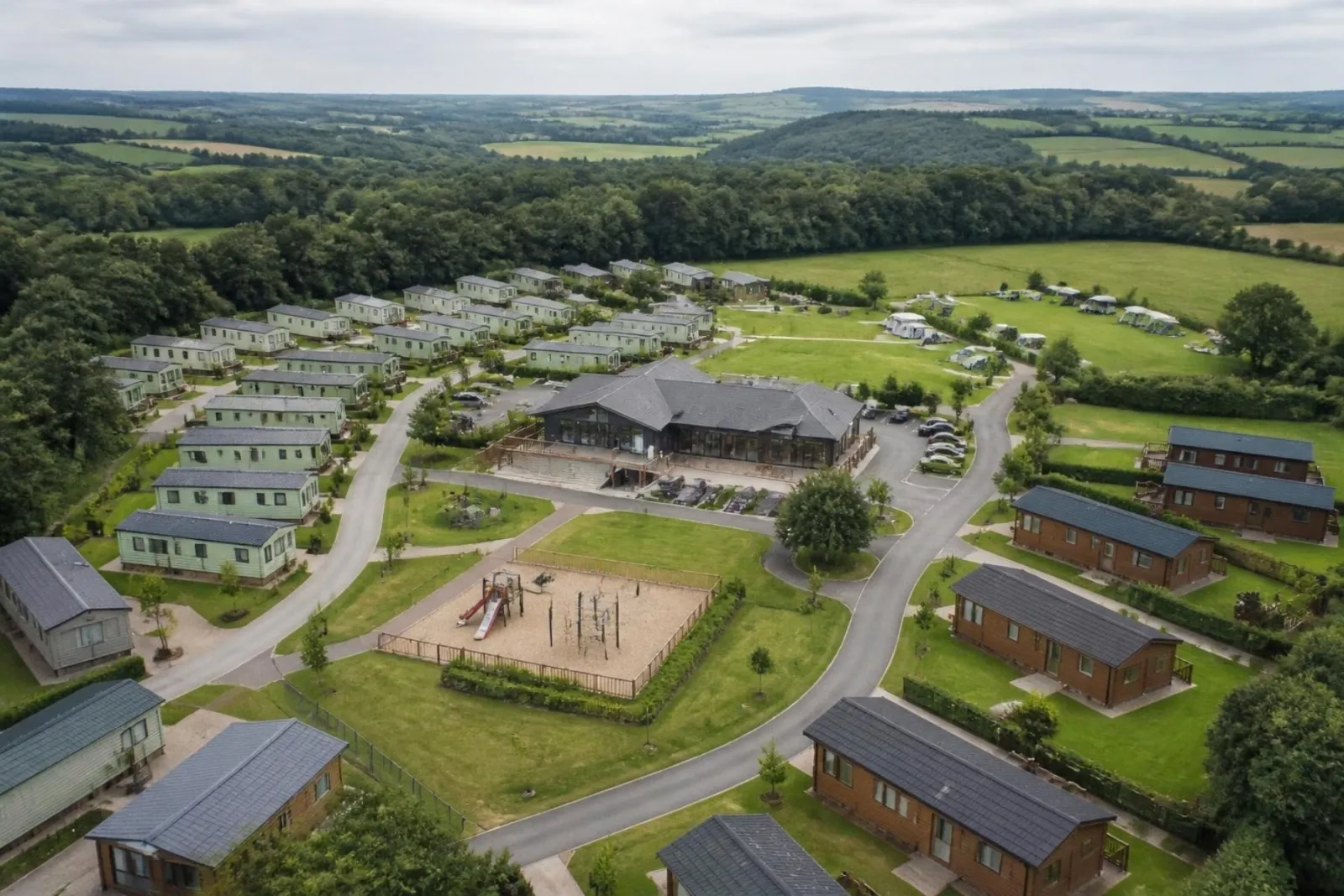
A mixed-use holiday park combines several income streams on one site: static holiday-home pitches, touring and camping, lodges, glamping, and on-site facilities such as a clubhouse, a pool, food and beverage and a shop. It is the most common model for a larger park, because the different streams smooth the income, broaden the customer base and let the operator earn from a guest in more than one way. A family on a touring pitch spends in the bar and the shop; a static owner pays a pitch fee year after year; a glamping guest fills a gap in the static market. The result is a diversified trading business rather than a single-line income.
That diversification is exactly what lenders like, and exactly what they scrutinise. A mixed-use park is funded on its earnings, typically on an EBITDA basis, with the lender looking at the whole operation and at each stream within it: which streams are stable, which are seasonal, which depend on the licence and which on consumer spend. The site licence, the planning consent and the tenure sit at the centre, because they define what each part of the park can lawfully do. Holiday parks are commercial trading businesses lent on income, not residential loan to value, and we arrange that finance as an arranger and introducer, not a lender. We do not give financial, legal or tax advice.
What we fund
- Parks combining statics, touring, lodges, glamping and facilities
- Larger destination parks with clubhouse, pool, food and beverage
- Going-concern park purchases bought on diversified trading earnings
- Refinance of an established park onto better terms
- Expansion of an existing park adding pitches or facilities
Indicative terms
- Typical lot size (indicative)£750k to £20m and above
- Commercial LTV (indicative)Up to ~50 to 65% of value
- Term rates (indicative)From around 6.5% (indicative)
- Expansion funding (indicative)Up to ~60 to 70% of cost
Indicative only. Terms vary by lender, asset and borrower and are not an offer of finance.
How is a mixed-use holiday park financed?
We arrange finance against the diversified trading earnings of the park rather than a residential loan to value. For an established park, a commercial mortgage is sized on adjusted earnings, typically EBITDA, advancing indicatively up to 50 to 65 percent of value at rates from around 6.5 percent, with the lender testing that the combined income from pitch fees, touring, lodges, glamping and facilities covers debt service through the season. For a going-concern purchase, the lender underwrites the historic accounts and the buyer's experience across each stream. For an expansion, development funding adds pitches or facilities against cost, indicatively up to 60 to 70 percent, exiting onto the term facility once the new income flows. The licence, planning and tenure are checked throughout, because they define what each stream can earn. We arrange and introduce throughout; we are not a lender, and figures are indicative and not an offer of finance.
Which lenders fund mixed-use holiday parks?
Mixed-use parks are funded by commercial and leisure lenders that understand trading businesses, not by residential or buy-to-let lenders, because the security is a multi-income operation rather than a property let for rent. These lenders like diversified income, since a park earning from several streams is less exposed to any one of them failing, but they scrutinise each stream rather than taking the headline EBITDA on trust. They ask which income is contractual, such as static pitch fees, and which is seasonal and discretionary, such as touring and bar spend; how the licence and planning underpin each part; what the tenure is and how long the licence runs; and how experienced the operator is across the different disciplines a mixed park demands. The valuation reflects the trading business and an alternative-use floor for the land. The lender field is specialist and the case has to be presented stream by stream, which is precisely how we build it.
Why do investors and lenders back mixed-use holiday parks?
A mixed-use park spreads its risk across several income streams, which is both its commercial appeal and the reason lenders favour the model. Static pitch fees provide a recurring contractual base, touring and camping add seasonal volume, lodges and glamping reach guests who would not buy a static, and on-site facilities capture spend that would otherwise leave the site. The UK supports a deep park market, with around 6,200 holiday parks and around 440,000 pitches (UKCCA, Pitching the Value 2024), and the larger, diversified parks sit at the heart of it. For the operator that diversification supports clear exits: refinance once the earnings are proven, expand a stream that is performing, or sell the park as a going concern to an operator or investor who prices the EBITDA. The land beneath provides a floor. Lenders back the park where the diversified income is genuine and the operator can run it, which is the case we build.
Finance that suits this asset class
- Leisure & trading-business park mortgagesSizes a term mortgage on the diversified EBITDA an established mixed-use park produces across its income streams.
- Holiday park & caravan park mortgagesFunds the going-concern purchase of a mixed-use park on its historic trading accounts and the buyer's experience.
- Holiday park refinance & equity releaseRefinances an established mixed park to release equity, fund expansion or move onto better terms as earnings strengthen.
Useful calculators
Related guides
Fund a mixed-use parks deal
A view on fundability within one working day.
What is a mixed-use holiday park as a finance asset?
A mixed-use holiday park is a single site that earns from several holiday income streams at once: static holiday-home pitches, touring and camping, lodges, glamping, and facilities such as a clubhouse, pool, food and beverage and a shop. For finance purposes it is a diversified trading business, and the defining feature is that no single stream carries the whole income. That diversification smooths earnings across the season and broadens the customer base, and it is why the larger, more established parks tend to follow this model rather than relying on one type of pitch.
The lending follows the business. A mixed-use park is funded on its adjusted trading earnings, with the lender assessing the whole and the parts: the contractual base of static pitch fees, the seasonal volume of touring, the capital-earning lodges and glamping, and the consumer spend through the facilities. That makes the underwriting resemble trading-business lending rather than property lending, and it places the operator's competence across several disciplines at the centre. We arrange finance for parks across this spectrum, sizing the debt on the diversified income the whole operation genuinely produces.
Why do lenders scrutinise each income stream?
Diversified income is a strength, but only if each stream is real. Lenders break a mixed-use park down rather than taking the combined EBITDA at face value, because the streams behave very differently. Static pitch fees are a recurring, broadly contractual base that a lender values highly; touring and camping income is seasonal and weather-dependent; lodge and glamping income depends on occupancy and rate; facilities income rises and falls with footfall and consumer confidence. A park that looks strong in aggregate may lean on one volatile stream, and a lender needs to see that.
So the case has to be presented stream by stream, with the stable income separated from the discretionary, the seasonal pattern shown honestly, and the costs allocated properly across the operation. The site licence and planning consent underpin which streams can lawfully run and at what scale, so they are read alongside the figures. We build the income case the way a leisure credit team expects, showing the diversification as the strength it is while being candid about where the income is softer, because a case that survives that scrutiny is the one that funds.
How does the site licence shape a mixed park loan?
The site licence is the document that defines what a holiday park may do, and on a mixed-use park it governs several activities at once: the number and type of pitches, the layout, the services, and any seasonal occupancy restriction. Lenders read it closely because it sets the ceiling on what each stream can earn. A licence that limits the season, caps pitch numbers or restricts certain uses directly constrains the income, and a park trading beyond its licence is a risk a lender will price or decline. The remaining term of the licence and the conditions attached to it feed straight into the underwriting.
Planning consent sits alongside the licence, governing the use of the land and any buildings such as the clubhouse, pool or facilities block. On a diversified park the planning picture can be layered, with different consents covering different parts, and a lender wants that mapped clearly against the income each part produces. We help borrowers present the licence and planning position so the lender can see that every income stream is lawful and that the consents support the trading figures. We arrange and introduce throughout, and we do not give planning or legal advice.
What does EBITDA underwriting mean for a park?
A mixed-use park is lent on earnings, so the lender works from EBITDA, the adjusted profit the park generates before financing and non-cash items, rather than from a property yield. The accounts are normalised to strip out one-off items and owner-specific costs, the result is the sustainable earnings the business produces, and the loan is sized so that those earnings cover debt service with headroom. This is trading-business lending, and it is why the historic accounts, the quality of the bookkeeping and the operator's track record matter as much as the bricks and the land.
For the borrower that means the case is won or lost on the numbers behind the headline. A park with clean accounts, clearly separated income streams and a credible explanation of any adjustments gives a lender confidence; a park with mingled figures and unexplained swings invites caution and a lower advance. We help present the earnings the way a leisure lender reads them, with the EBITDA built up transparently from each stream and the debt sized conservatively against it. Any figures in a projection are indicative and not an offer of finance, and the tax treatment is a matter for the borrower's accountant.
How are park acquisitions and refinances arranged?
Buying a mixed-use park as a going concern is a trading-business purchase, and the finance reflects that. The lender underwrites the historic accounts, normalises the earnings to a sustainable EBITDA, and tests that the income covers the debt with the buyer at the helm, weighing the buyer's experience across the several disciplines the park demands. The site licence, planning consent and tenure are checked as part of due diligence, because they define the income the buyer is acquiring. Many parks are held through a limited company or SPV, which is common in commercial leisure lending, and we arrange the debt around whatever structure the buyer's advisers recommend.
Refinancing an established park follows the same logic in reverse. Once a park has a proven trading record, refinance can release equity, fund the next phase of expansion or simply move the borrowing onto better terms as the earnings strengthen. The lender sizes the new facility on the current EBITDA and the current valuation, and a park that has grown its diversified income since the last facility will usually find better terms available. We arrange acquisition and refinance alike, presenting the trading case clearly. We are an arranger and introducer, not a lender.
Worked example: acquiring an established mixed-use park
A buyer with leisure experience agrees to purchase an established holiday park combining static pitches, touring, a handful of lodges and a clubhouse with a bar and shop. The site licence has a long unexpired term, planning is in order across the streams, and three years of accounts show a sustainable EBITDA after the usual adjustments. The agreed price is around £6,000,000, and the buyer will hold the park through a limited company.
We arrange a commercial mortgage sized on the adjusted earnings, advancing indicatively 60 percent of value, around £3,600,000, at a rate reflecting the trading security and the buyer's experience, with the lender testing that the diversified income covers debt service with headroom through the season. The static pitch fees provide the contractual base the lender values, while the touring, lodge and facilities income are assessed stream by stream and discounted for seasonality.
This is illustrative only, not an offer of finance, and the figures are indicative and depend on the lender, the park and the trading evidence at the time.
Illustrative worked example only. Figures vary by lender, asset and borrower and are not an offer of finance.
Frequently asked questions
How do lenders value a mixed-use holiday park?
A mixed-use park is valued and lent on as a trading business, not as residential property. The lender works from the adjusted earnings, typically EBITDA, normalising the accounts to a sustainable figure and sizing the loan so the income covers debt service with headroom. The valuation reflects the trading business as a going concern, with an alternative-use value for the land providing a floor. Each income stream is assessed on its own, since static pitch fees behave very differently from seasonal touring or facilities spend. As an indication, advances run up to around 50 to 65 percent of value at rates from around 6.5 percent. These figures are indicative and not an offer of finance.
Is diversified income an advantage when applying for finance?
Generally yes, provided each stream stands up. Lenders like diversified income because a park earning from statics, touring, lodges, glamping and facilities is less exposed to any single stream failing than a park reliant on one type of pitch. That said, they scrutinise each stream rather than taking the combined EBITDA on trust, separating the contractual base of static pitch fees from the seasonal and discretionary income, and discounting accordingly. A park that presents its streams clearly, with stable income distinguished from volatile, makes a stronger case than one that leans heavily on a single volatile line. We build the case stream by stream so the diversification reads as the strength it is. We are an arranger, not a lender.
Can I buy a holiday park through a limited company?
Yes, and it is common. Commercial leisure lenders are comfortable lending to a limited company or special purpose vehicle holding a park, and many buyers structure their acquisition that way for commercial and practical reasons. The lender will underwrite the trading business and the earnings as the primary security, and will usually look at the people behind the company, their experience and their commitment to the operation. We arrange the debt around whatever ownership structure the buyer's advisers recommend, rather than prescribing one. The choice of structure has tax and legal consequences that are a matter for the borrower's accountant and solicitor, on which we do not advise. Figures and terms are indicative and not an offer of finance.
Why does the site licence matter so much to a park lender?
The site licence defines what a holiday park may lawfully do, so it sets the ceiling on what the park can earn. On a mixed-use park it governs pitch numbers and types, the layout, the services and any seasonal occupancy restriction, and the lender reads it directly into the income it will underwrite. A licence that limits the season or caps pitches constrains the income, and a park trading beyond its licence is a risk a lender will price or decline. The remaining term of the licence also matters, since a short term affects security. We help borrowers present the licence position clearly alongside the trading figures, because a lender that can see the income is lawful can fund with confidence.
Funding a mixed-use parks asset?
Tell us about the deal and we will come back with a view on fundability and likely terms.