The UK holiday park market
The UK holiday park market is the part of the leisure-property market that earns from pitch fees, holiday-home sales and on-site trade across static, touring, l
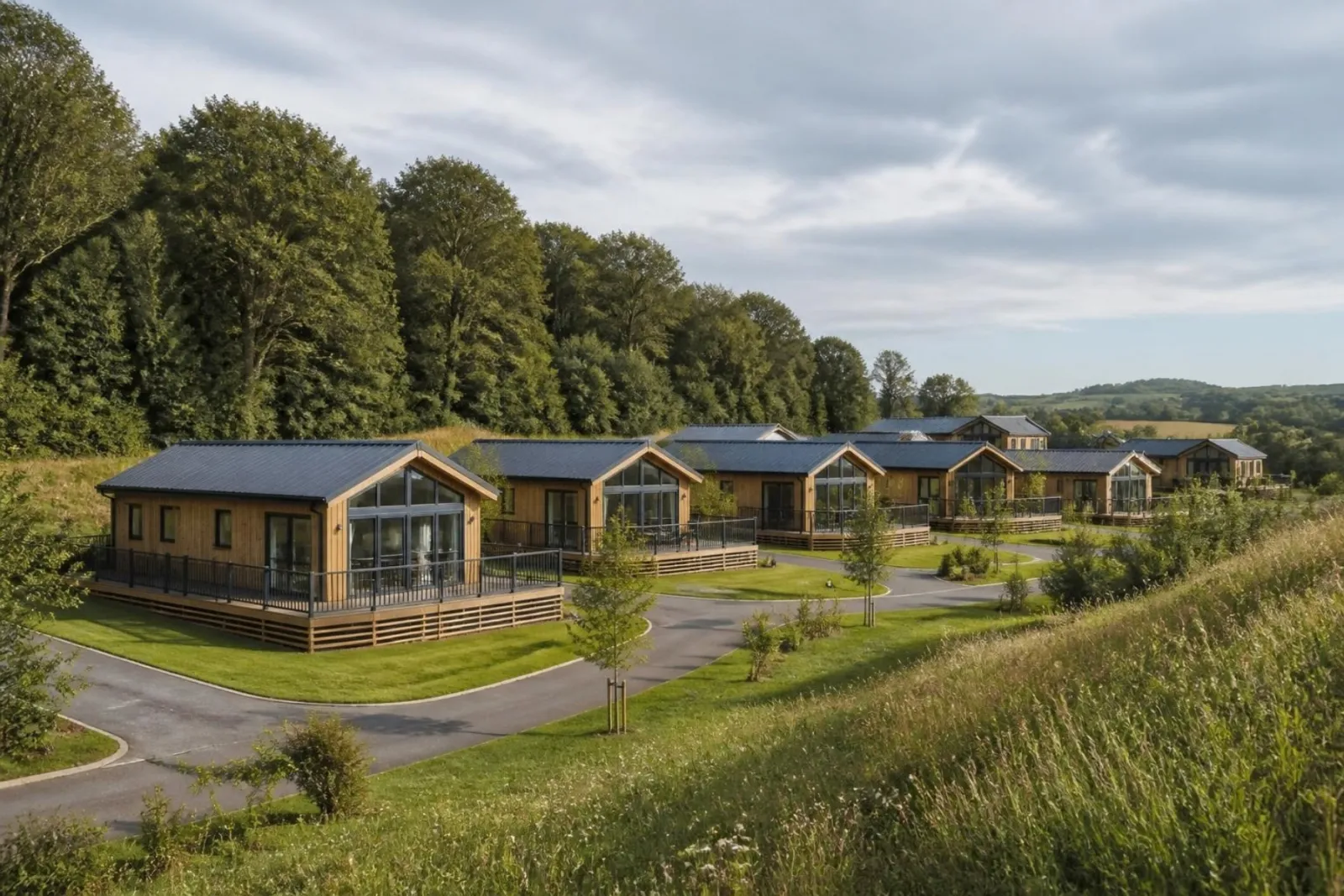

The UK holiday park market is the part of the leisure-property market that earns from pitch fees, holiday-home sales and on-site trade across static, touring, lodge and glamping parks, rather than from long tenancies or single lets. It is a large, established sector that has drawn growing investor interest, set against a backdrop of durable staycation demand and a tightening tax and regulatory environment. Understanding the data and the direction of travel matters for anyone buying or financing a park.
This guide sets out the market with sourced reference points: the scale of the sector, occupancy and transaction values, deal activity, the regulatory and tax direction, and what it all means for borrowers. We arrange holiday park finance as a broker and introducer, not a lender. Figures here are qualitative or attributed to named sources, and this is general information rather than investment advice.
The scale of the sector
The UK holiday park sector is large and well established rather than speculative. The UK Caravan and Camping Alliance's Pitching the Value 2024 report counted around 6,200 holiday parks and roughly 440,000 pitches across the UK, a sizeable base of trading assets serving the domestic holiday market. This scale gives the sector depth: a broad spread of park types, locations and operators, an active market for holiday homes, and a body of specialist lenders, valuers and agents who understand parks as trading businesses.
The income underpinning the sector is a blend of recurring pitch fees from holiday-home owners, the margin on selling new static caravans and lodges, touring and camping income, and ancillary trade. That diversity of income across many pitches and revenue lines gives a well-run park a resilience that a single let does not have, and it is part of why parks have attracted investors looking for trading assets with durable cash flow. The data points to a mature market with established demand, though one in which outcomes still depend heavily on the individual park's tenure, licence, location and income mix.
Occupancy, transaction values and profit conversion
Park performance is best read through occupancy, value per pitch and profit conversion. The UKCCA's Pitching the Value 2024 report put high-season pitch occupancy around 68 per cent, a guide to how full the sector runs at peak, though occupancy varies by park type, location and season. Savills' Holiday and Home Park Update 2025 reported an average transaction value of around 34,192 pounds per pitch on holiday static parks in 2024, a per-pitch benchmark for sizing value, alongside operator profit conversion of around 29 per cent, showing that under a third of turnover typically reaches the profit line.
These figures are reference points, not valuations: any individual park's occupancy, value per pitch and profit conversion turn on its own tenure, licence, season, income mix and management. The practical lesson for investors and lenders is to underwrite on the specific park's evidenced earnings rather than on sector averages, while using the published benchmarks as a sense-check. A park whose conversion is far above or below the roughly 29 per cent norm, or whose per-pitch value diverges sharply from the average, deserves a closer look at why.
Deal activity and investor appetite
Investor appetite for parks has been strong. Christie and Co reported agreed park and leisure deals tripling in the first half of 2025, a clear sign of active demand for trading parks as investments. That activity reflects the sector's appeal: durable recurring income, a tangible freehold asset, and the diversification of several revenue lines on one site, set against an environment where some investors have moved capital away from individual residential lets after the tax changes.
An active deal market has two implications for buyers. It means good parks attract competition and move quickly, so being ready with finance agreed in principle is an advantage, and it means pricing can be firm, so disciplined underwriting on evidenced earnings matters more than ever. The funding market has kept pace, with specialist leisure lenders, commercial banks and bridging and development lenders all active in the sector and limited company lending well established. A well-located, well-evidenced, well-financed park remains a sought-after asset.
The regulatory and tax direction of travel
Two forces are shaping the market's direction. On tax, the furnished holiday lettings regime was abolished from April 2025, removing the favourable treatment that had supported some demand for owning holiday caravans to let, which indirectly touches the pitch-fee and sales base, even though the park operator's own trade is taxed as a business. On regulation, the framework of caravan site licensing, planning control over use, density and season, and the separate rules governing any residential park-home element continues to shape what parks can do and how they are valued.
The direction of travel is towards a more professional, better-capitalised sector. Tighter tax on individual holiday lets and the demands of running a compliant, well-invested park favour experienced operators with the capital to maintain infrastructure, fund stock and meet licence conditions. This is not a contraction of the sector but a raising of the bar: the parks that perform are those with genuine demand, durable recurring income, sound tenure and a clean licence. Our park licensing and rules guide and our FHL tax changes guide cover these shifts in detail.
What the market means for borrowers
For borrowers, the market backdrop has clear implications. The case for a park now rests on durable, evidenced earnings, good tenure and a clean licence rather than on optimistic projections or tax tailwinds, so lenders and investors alike are underwriting on the fundamentals. A well-located, well-run, freehold park with durable pitch-fee income and a long season remains very fundable; a park with weak tenure, a restrictive licence or earnings reliant on cyclical sales is a harder credit story than it might once have been.
The funding market itself remains active, with specialist leisure lenders, commercial banks, and bridging and development lenders competing for good business, and limited company lending well established. The operators who finance well in this market are those who buy on sound, evidenced numbers and present a clear tenure and licence position. We arrange the finance across the whole sector, from single-park acquisitions to development and portfolios, as a broker and introducer, and we help clients present their deal the way lenders now want to see it. Our holiday park finance guide sets out the products.
The UK holiday park market: common questions
How big is the UK holiday park market?
Large and well established. The UK Caravan and Camping Alliance's Pitching the Value 2024 report counted around 6,200 holiday parks and roughly 440,000 pitches across the UK, with high-season pitch occupancy around 68 per cent. It is a mature sector with a broad spread of park types, an active market for holiday homes, and specialist lenders and valuers who understand parks.
What is a holiday park worth per pitch?
Savills' Holiday and Home Park Update 2025 reported an average transaction value of around 34,192 pounds per pitch on holiday static parks in 2024, with operator profit conversion of around 29 per cent. These are sector benchmarks; any individual park's value depends on its tenure, licence, season, income mix and management, so they sense-check rather than replace a valuation.
Is the holiday park market active for buyers?
Yes. Christie and Co reported agreed park and leisure deals tripling in the first half of 2025, reflecting strong investor appetite for trading parks. An active market means good parks attract competition and move quickly, so being ready with finance agreed in principle is an advantage, and disciplined underwriting on evidenced earnings matters.
Is it still a good time to finance a holiday park?
The funding market remains active, with specialist leisure, commercial, bridging and development lenders competing and limited company lending well established. A well-located, freehold park with durable pitch-fee income, good tenure and a long season is very fundable; the key is to buy on sound, evidenced numbers with a clear licence position. We arrange the finance across the sector as a broker and introducer.
Ready to talk about a real deal?
Send us the deal and we will come back with a view on fundability and likely terms within one working day.