Static vs lodge vs glamping parks compared
Static caravan, lodge and glamping parks are three of the main holiday park models, and they suit very different operators and budgets. A static park holds cust
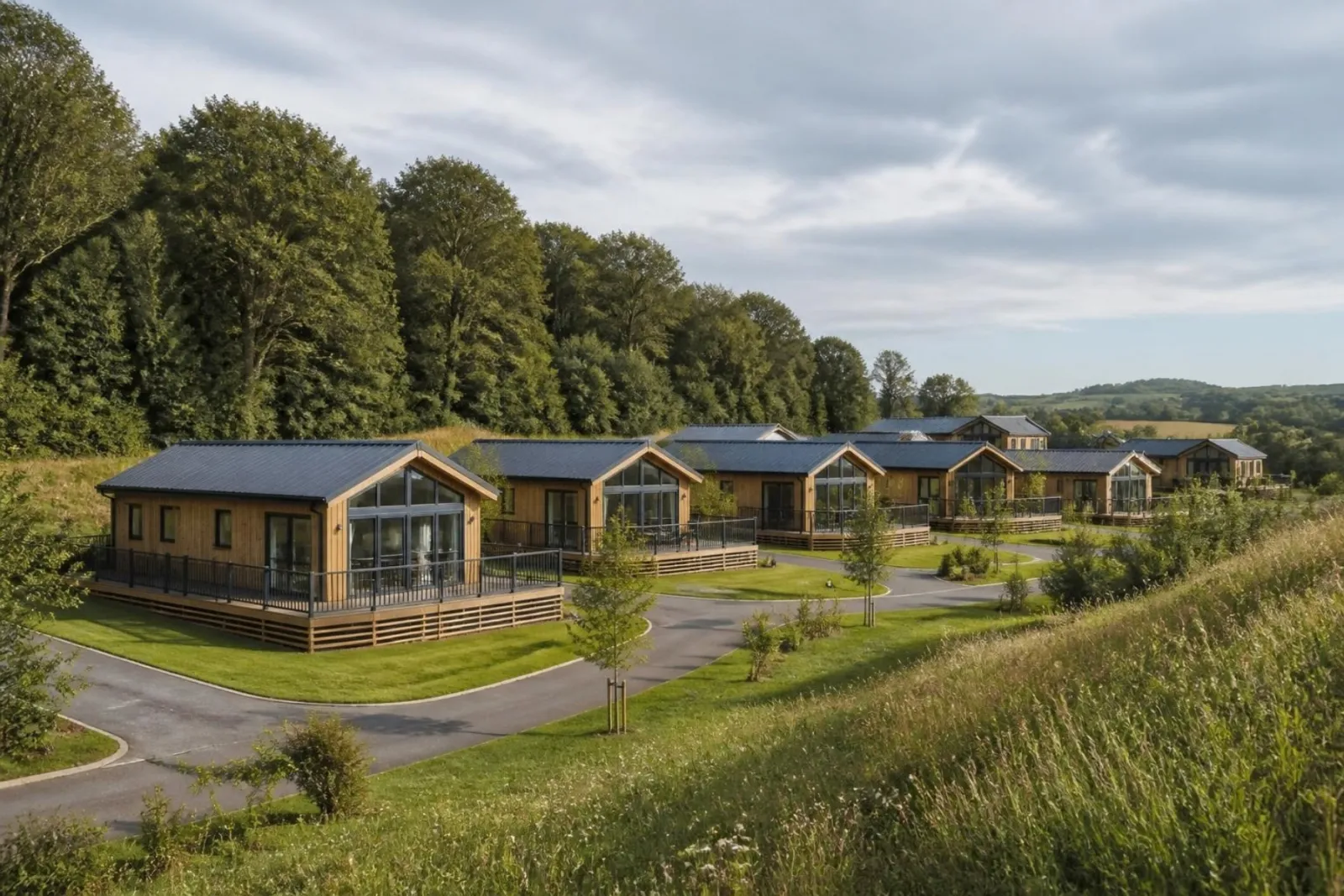
Static caravan, lodge and glamping parks are three of the main holiday park models, and they suit very different operators and budgets. A static park holds customer-owned holiday caravans on annual pitch fees with margin on new sales; a lodge park holds larger, higher-specification timber lodges commanding higher fees and sale values; a glamping site offers park-owned pods, safari tents or huts let nightly. The choice is not simply which earns more, but which balance of capital cost, income type, planning and operating effort fits you.
This guide compares the three models on pitch numbers and density, holiday-home sales margins, capital cost and planning, and how lenders treat each when funding a park. We arrange finance for all of them as a broker and introducer, not a lender, and this is general information rather than investment advice.
Pitch numbers, density and income type
The models differ first in how many units a site holds and how the income arrives. Static caravan parks tend to fit a higher density of pitches, with income dominated by recurring annual pitch fees from a large base of owners, plus sales margin on new units. Lodge parks hold fewer, larger units at lower density, but each lodge commands a higher pitch fee and a much higher sale value, so a smaller number of pitches can generate substantial income. Glamping sites typically hold a modest number of park-owned units let nightly, with income behaving more like a holiday let, seasonal and occupancy-driven, than like recurring pitch fees.
These differences shape the risk profile. A static park's large base of recurring fees is durable and valued highly, but depends on a stable owner base and continued sales. A lodge park concentrates value in fewer, higher-value units, which can mean higher returns per pitch but more exposure to each sale. A glamping site has the most variable income, closest to nightly holiday letting, with the lowest recurring base. Understanding which income type you are buying or building is central to assessing both the return and the finance.
Holiday-home sales margins compared
Sales margin differs sharply across the models. On a static park, the margin on selling new caravans sited on pitches is often the largest single profit line, but it is cyclical and runs on consumer confidence and the availability of development pitches. On a lodge park, the sale values are much higher per unit, so the margins can be substantial, but the customer base is smaller and the units cost far more to buy and site, which raises the capital at risk on each sale. Glamping is different again: the park usually owns and operates the units rather than selling them, so there is little sales margin, and the return comes from nightly letting instead.
For a buyer or developer, this means the models carry their profit in different places. A static park's profit is a blend of recurring fees and sales; a lodge park's is fewer, larger sales plus high fees; a glamping site's is operating income with no sales line. A park that has sold out its development pitches, whether static or lodge, loses its sales profit and falls back on recurring income, which is why the forward pitch and stock position matters as much as the historic accounts. Our holiday park yields and EBITDA guide covers how to read the income mix.
Capital cost and planning compared
The capital and planning profiles vary widely. A static park, if bought as a going concern, is funded on its earnings, but developing new static pitches needs groundworks, services and stock. Lodge development is more capital-intensive per unit, because lodges are larger and more expensive to buy and install, and often need more substantial bases and services, but each unit earns and sells for more. Glamping has the lowest capital cost per unit, which is part of its appeal, but the units earn nightly rather than through pitch fees and sales.
Planning is the other major variable. Adding or changing the type of units, extending the season, or introducing lodges or glamping where the consent does not allow them all turn on the planning permission and the caravan site licence, and may need fresh consent. Glamping in particular can face planning scrutiny in open countryside, while lodge and static development is governed by the existing licence and any conditions. The permitted use, density and season set the ceiling on what each model can earn, so the consents are part of the appraisal, not a formality. Our caravan site licence guide and our park licensing and rules guide cover the planning and licence position.
How lenders treat each model
Lenders read the three models through the durability of the income and the strength of the security. A static park with a large base of recurring pitch fees and good tenure is a well-understood, financeable asset, sized on its EBITDA at around 50 to 65 per cent loan to value over a term. A lodge park is also financeable on its earnings, with lenders attentive to the concentration of value in fewer units and to the dependence on lodge sales. Glamping, with its nightly, more variable income and lower recurring base, is often financed more cautiously, particularly where it is a standalone site rather than part of a larger park.
Development of any of the three is funded differently from acquisition: development finance is released in stages against build cost and the projected end value and income of the finished pitches or units, then refinanced onto a term facility once trading. A mixed park, combining static, lodge and glamping with ancillary trade, can present a strong, diversified income that lenders like. We arrange acquisition, development and refinance across all three models, and larger glamping and lodge schemes can run through our glamping and lodge development finance. We act as a broker and introducer, not a lender.
Static vs lodge vs glamping parks: common questions
What is the difference between a static, a lodge and a glamping park?
A static park holds customer-owned holiday caravans on annual pitch fees with sales margin on new units; a lodge park holds fewer, larger, higher-specification timber lodges commanding higher fees and sale values; a glamping site offers park-owned pods, tents or huts let nightly. They differ in density, income type, capital cost and how lenders treat them.
Which is more profitable, static caravans, lodges or glamping?
It depends on the site, the consents and how it is run. Static parks earn durable recurring fees plus cyclical sales; lodge parks earn high fees and large but fewer sales; glamping earns variable nightly income with low capital cost. None is inherently more profitable; the return turns on location, the licence, the income mix and management.
Is glamping easier to finance than a static or lodge park?
Often it is treated more cautiously, because glamping income is nightly and more variable with a lower recurring base, especially for a standalone site. A static or lodge park with durable pitch-fee income and good tenure is a more established lend. Glamping within a larger mixed park, or as a development against cost and end value, can still be well financed.
Do I need planning permission to add lodges or glamping to my park?
Quite possibly. Adding or changing the type of units, the density or the season turns on the existing planning permission and caravan site licence, and introducing lodges or glamping where the consent does not allow them may need fresh permission. Glamping in open countryside can face planning scrutiny. Confirm the position with the council before committing.
Ready to talk about a real deal?
Send us the deal and we will come back with a view on fundability and likely terms within one working day.