The furnished holiday let tax changes: what they mean for park owners
The furnished holiday lettings (FHL) tax regime, which for years gave qualifying self-catering holiday accommodation a set of advantages over ordinary rental pr
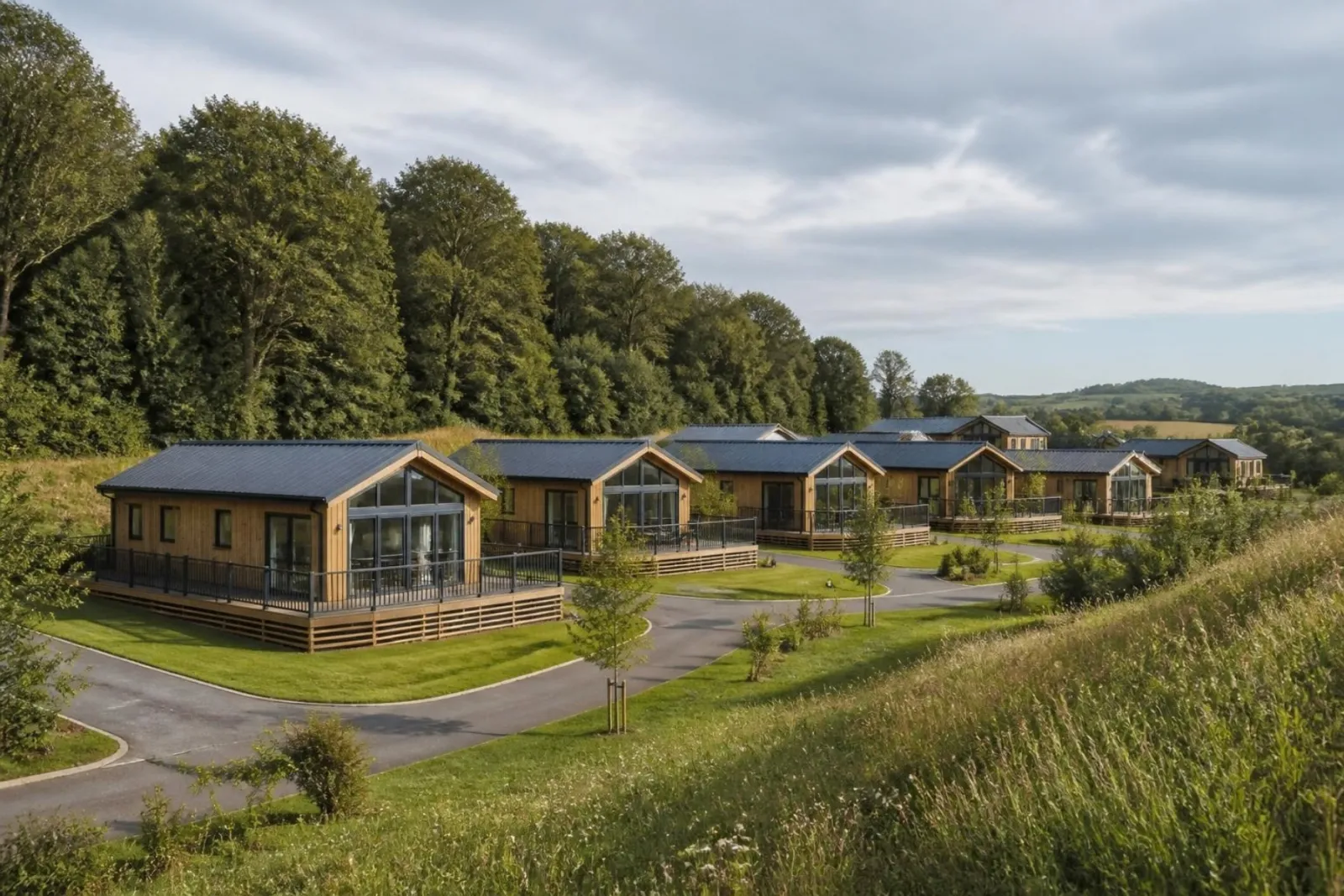

The furnished holiday lettings (FHL) tax regime, which for years gave qualifying self-catering holiday accommodation a set of advantages over ordinary rental property, was abolished from April 2025. For holiday park owners and the holiday-home owners on their parks, this is an important change, even though its effect on a park operator differs from its effect on an individual letting a caravan, because it altered the tax treatment of holiday accommodation that part of the sector relies on.
This guide explains what the FHL regime was, what was abolished, how it affects park owners and the holiday homes sited on a park, and the limited company response that many owners are considering. We arrange holiday park finance as a broker and introducer, not a lender, and we are not tax advisers. This is general information only; the detail of how the changes affect you depends on your circumstances, so take advice from a qualified accountant.
What was the FHL regime?
For decades, a property that met the furnished holiday lettings conditions, broadly being furnished, available to let for a set number of days and actually let commercially for a minimum period each year, was treated for tax more like a trading business than ordinary rental property. That special status carried a bundle of advantages that standard buy to lets did not get, which is why qualifying holiday accommodation, including many privately let holiday caravans and lodges, had a distinct tax appeal.
The main FHL advantages were: full deductibility of mortgage interest and finance costs against rental profits, rather than the restricted basic-rate relief that applied to ordinary lettings; capital allowances on furniture, fixtures and equipment; treatment of profits as relevant earnings for pension contribution purposes; and access to certain capital gains tax reliefs on disposal, including reliefs aimed at business assets. Together these could make a qualifying holiday let materially more tax-efficient than an ordinary residential let, particularly for a higher-rate taxpayer carrying borrowing.
What was abolished, and from when?
From April 2025, the FHL regime was abolished, and qualifying holiday accommodation lost its special status. In practical terms, such accommodation is now taxed broadly in line with other residential property businesses. The full deduction of finance costs is replaced by the restricted basic-rate tax reduction that already applied to ordinary lettings, so a higher-rate taxpayer can no longer deduct all their finance costs from rental profit. The specific capital allowances treatment, the pension-relevant-earnings status and the FHL-specific capital gains reliefs were removed.
The change applies to income and gains from the relevant date onward, with transitional provisions for some items. The headline effect is that the tax wrapper that distinguished qualifying holiday accommodation from ordinary rental property has gone. The exact mechanics, transitional rules and the treatment of any losses or allowances carried forward are detailed and individual, which is precisely why this is a question for an accountant rather than a broker. It is also why the effect differs between a park operator and an individual holiday-home owner, as the next section sets out.
How it affects park owners and holiday-home owners
The effect depends on who you are. A holiday park operator runs a trading business, taxed as a trade, so the abolition of the FHL regime does not change the core taxation of the park's pitch-fee and sales income in the way it changes a residential letting. Where it does touch a park operator is on any park-owned holiday units that the park lets out as holiday accommodation, whose treatment falls in line with the new rules, and on the wider demand picture described below.
For the individual holiday-home owners sited on a park, who buy a caravan or lodge and let it to holidaymakers, the change is more direct: the favourable FHL treatment they may have relied on has gone, so the after-tax return on letting a holiday caravan has changed. Because the appeal of owning a holiday home to let underpins part of the demand that supports pitch fees and caravan sales, park operators have an indirect interest in this shift. It is one more reason to assess a park's income on durable, recurring fundamentals rather than on assumptions about letting demand that the old tax reliefs helped support.
The limited company response
The most common response among property investors, mirroring what the buy to let market did when its own interest relief was restricted years ago, is to consider holding through a limited company. Inside a company, finance costs are deductible against profits in the normal way, so the restriction that now applies to individuals does not bite in the same manner, and profits can be retained within the company for reinvestment rather than drawn out and taxed personally. Many holiday parks are already held through companies, and structuring a park purchase through a company or special purpose vehicle is well established.
A company is not automatically better, though. It brings corporation tax, the cost and complexity of extracting profits, administration, and considerations around moving an existing personally-held asset into a company, which can itself trigger tax. The right answer depends on your income, your plans and your wider position, and it is a decision for an accountant. On the finance side, lending to a property-holding or park-owning company is well established, and investors weighing the structure often speak to our colleagues at Limited Company Property Finance. We arrange the finance once the structure is chosen; we do not advise on which structure to use.
The FHL tax changes (2025): common questions
When was the FHL tax regime abolished?
From April 2025. Qualifying furnished holiday accommodation lost its special tax status from that date and is now taxed broadly like other residential property businesses, with transitional provisions for some items. The exact application depends on your circumstances, so take advice from an accountant.
Does the FHL change affect a holiday park operator?
Less directly than it affects an individual letting a caravan. A park operator runs a trading business taxed as a trade, so the core pitch-fee and sales income is not affected in the same way. It does touch any park-owned units let as holiday accommodation, and indirectly the demand from holiday-home owners who let their caravans, whose tax appeal has reduced.
How does the FHL change affect holiday-home owners on a park?
For individuals who own a caravan or lodge on a park and let it to holidaymakers, the favourable FHL treatment, including full finance-cost relief and certain reliefs, has been removed, so the after-tax return on letting has changed. The exact effect depends on their circumstances, so they should take advice from an accountant.
Does this article count as tax advice?
No. This is general information only and not tax advice. The FHL changes are detailed and their effect depends entirely on your individual circumstances, so confirm your position with a qualified accountant before making decisions about a holiday park or the holiday homes on it.
Ready to talk about a real deal?
Send us the deal and we will come back with a view on fundability and likely terms within one working day.