The holiday park lending market in 2026
The holiday park lending market in 2026 is more settled than it has been for several years. Interest rates have come down from their 2023 peak, pitch values hav
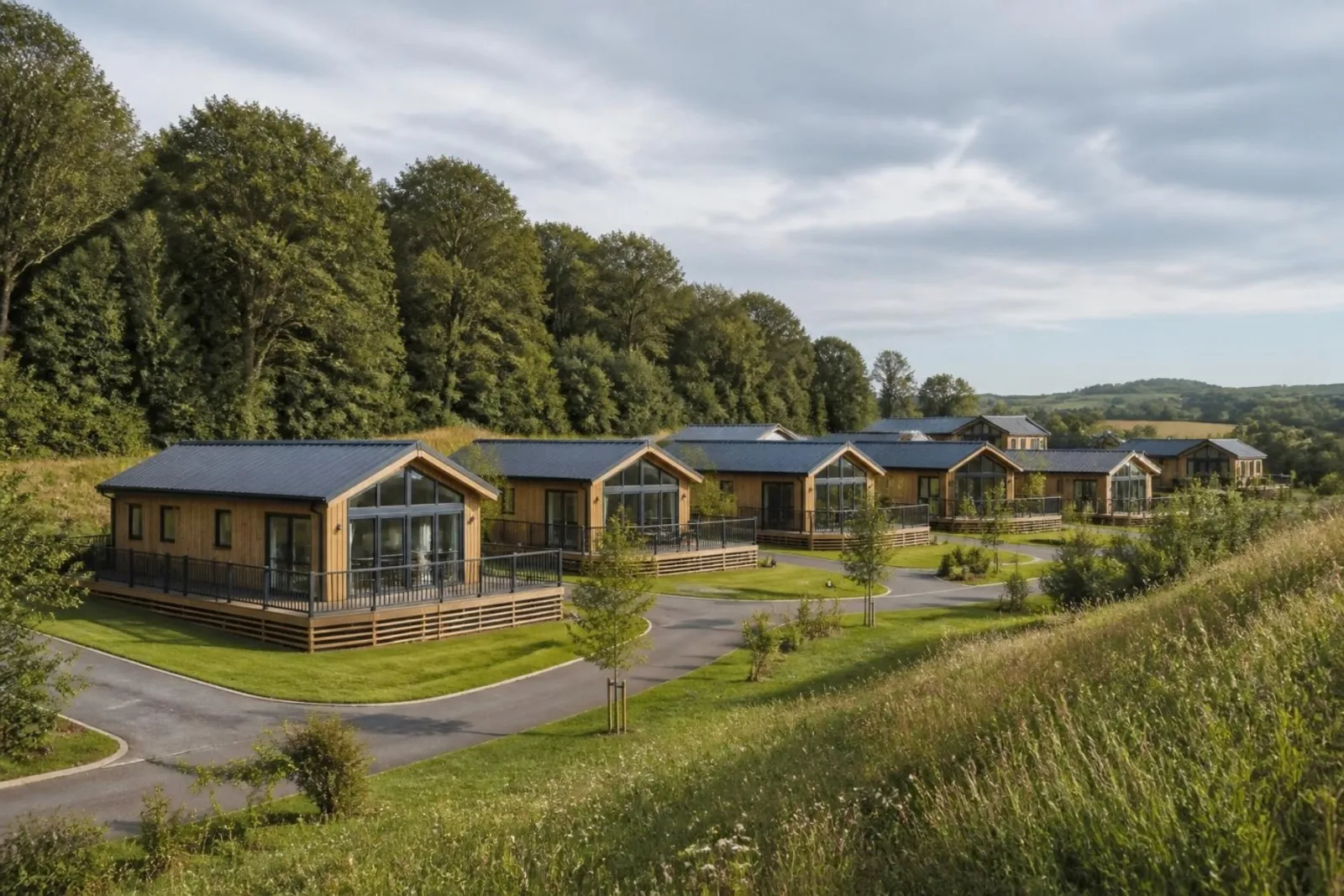

The holiday park lending market in 2026 is more settled than it has been for several years. Interest rates have come down from their 2023 peak, pitch values have stopped falling, deal volumes have picked up, and the lenders who understand parks are open for business on well-run, well-evidenced sites. It is not a return to the easy money of 2021, though. Finance is still dearer than it was before 2022, operating costs are rising, and lenders are drawing a sharper line between strong parks and weaker ones.
This guide sets out where the lending market stands as of September 2026: where interest rates are, how park lenders assess a deal, the structures on offer, what is driving appetite and the risks lenders are watching, and what it all means if you are buying or refinancing a park now. We arrange holiday park finance as a broker and introducer across specialist leisure and commercial lenders. We are not a lender, every figure below is attributed to its source, and this is general information rather than financial advice.
Where interest rates are in 2026
The starting point for any park loan is the Bank of England's Bank Rate, because most commercial park facilities are priced as a margin over Bank Rate or over a market swap rate that moves with it. According to the Bank of England, Bank Rate stands at 3.75 per cent. It was last changed on 18 December 2025, when it was cut from 4 per cent, and the Monetary Policy Committee has held it at 3.75 per cent at each meeting since, most recently on 17 September 2026. For context, the Bank of England's rate history shows Bank Rate peaked at 5.25 per cent in August 2023 and has been cut in stages since August 2024.
That fall has helped. Savills, in its Holiday and Residential Park Update 2026, credits easing inflation and a lower base rate with improving funding conditions and encouraging capital back towards operational real estate such as parks. It also records that rates did not come down as quickly as many hoped during 2025, so many operators held off refinancing. Christie and Co's Business Outlook 2026, published in January 2026, strikes a similar balance: rate reductions offered some relief, but rates, though expected to fall, will keep financing comparatively expensive, and the sustained higher rate environment has weighed on cash flow across the sector. The practical reading is that debt is cheaper than it was two years ago but still a real cost that a park's earnings must comfortably carry.
How park lenders assess a deal
A holiday park is lent against as a trading business, not as bricks and mortar, so the lender's first question is how much sustainable profit the park makes. That means EBITDA, adjusted for one-off items and for the owner's own drawings, tested over two or three years of accounts rather than a single good season. The loan is then sized so that the earnings cover the interest and capital payments with a margin to spare under a stressed interest rate, and checked against a loan to value on the park's going-concern valuation. Savills reported average operator profit conversion of around 29 per cent in 2024 in its 2025 update, and its 2026 update notes that conversion has typically dropped slightly since, as cost increases could not always be passed on.
Lenders then look at the quality of the income. Pitch fees from holiday-home owners are the most prized line because they recur every year: Savills' 2026 update puts pitch-fee income at an average of 30 per cent of turnover in 2025, down from 36 per cent in 2024, but still a stable base that typically covers core operating costs. Holiday-home sales contributed around 36 per cent of turnover on the same Savills figures, often at lower margins. Alongside the numbers sit the site licence and planning consent (pitch numbers, permitted use and the length of the open season), the tenure (freehold is strongest, a short lease weakest), and the operator's track record. Christie and Co's 2026 outlook expects bank lending to continue to favour established operators: experience running parks is part of the credit case, not a formality.
Why the holiday-home sales margin gets extra scrutiny
On most static parks, selling new and pre-owned caravans and lodges is a large source of profit, and it is the line lenders are most cautious about. Sales income depends on consumer confidence, the availability of finance to buyers and the supply of new units, so it swings with the economy in a way pitch fees do not. A park whose EBITDA leans heavily on a strong sales year will usually see a lender normalise or discount that income before sizing the loan.
The current cycle explains why. Savills' 2026 update describes caravan sales as still subdued compared with the post-Covid boom, with an oversupply of caravan stock sitting with manufacturers and distributors, and with budget and entry-level models outperforming mid and premium ranges as buyers stay cost conscious. Christie and Co's 2026 outlook likewise points to weak caravan sales limiting demand for development sites. For a borrower, the lesson is to present sales income honestly, show the pipeline and the margin per unit, and make sure the loan still works if sales run at a cautious level rather than the best year on record.
The structures lenders are offering
The core product is the term park mortgage: a commercial loan secured on the park, usually through a limited company or special purpose vehicle, with a first charge, often a debenture and personal guarantees from the principals. Terms indicatively run for 15 to 25 years on capital and interest, sometimes with a period of interest only. This is the facility for buying or holding a trading park whose accounts support the debt. Our holiday park finance guide sets out how it compares with the other products.
Around it sit three other structures. Bridging finance is short-term debt used when a term lender cannot act on day one: a fast or distressed purchase, a park that needs repositioning, or accounts that do not yet show the earnings. It costs more and only works with a clear exit, usually a refinance onto a term mortgage. Development finance funds new pitches, lodges and glamping in stages against cost and end value; Christie and Co's 2026 outlook notes that it remains relatively expensive and expects continued caution on forward-looking development. Refinance replaces an existing facility to cut the cost, extend the term or release equity once the park's earnings have improved, and Christie and Co predicts a rise in refinancing activity in 2026 as base rates ease. At the very top of the market the structures are different again: Savills records that Blackstone refinanced the Haven group through a commercial mortgage-backed securities structure in August 2025, a reminder that the largest groups raise debt in the capital markets rather than from the lenders that serve independent parks.
Leverage and pricing
Park lenders lend cautiously compared with residential or investment property, because the value depends on a business continuing to trade. As an indicative planning range, term park mortgages tend to sit at around 50 to 65 per cent of the going-concern value, which means a buyer should expect to contribute roughly 35 to 50 per cent of the price plus costs from equity. Where a deal lands in that range depends on the earnings cover, the recurring share of income, the tenure and licence, and the operator. This is our working range from the market rather than a published statistic, and individual lenders vary.
Pricing follows the same logic. The margin over Bank Rate or the swap rate reflects the lender's view of risk: lower leverage, strong recurring pitch-fee income, a freehold with a long open season and an experienced operator all earn keener pricing, while higher leverage, sales-dependent earnings or a short lease cost more. Arrangement, valuation and legal fees sit on top. We quote pricing deal by deal rather than as a headline rate, because a single figure would mislead more borrowers than it helped. The one thing the market data does say clearly is that over-gearing is dangerous: Christie and Co's 2026 outlook warns that fundamentally strong businesses which are over-leveraged can still struggle, and records an increase in distressed activity across the sector in 2025.
What is driving lender appetite
Lenders follow transactions, and transactions have recovered. Savills' 2026 update reports that deal volumes roughly doubled year on year in 2025, with most transactions between 1 million and 5 million pounds, while sales above 10 million pounds were scarce. Christie and Co reported agreed park and leisure deals tripling in the first half of 2025. Pitch values have steadied after the post-pandemic correction: Savills puts the average per-pitch value on holiday static parks at 32,190 pounds in 2025, down from a 42,598 pound peak in 2023 and slightly below pre-pandemic levels, with touring parks averaging 10,833 pounds per pitch and residential parks recovering to 40,547 pounds. Stable values give valuers and lenders firmer ground to lend against.
Underneath the deal numbers is durable demand. The UK Caravan and Camping Alliance's Pitching the Value 2024 report counted around 6,200 parks and 440,000 pitches, with high-season pitch occupancy around 68 per cent. Savills notes a continuing shift towards shorter, more frequent breaks, which favours parks with dynamic pricing and mobile booking. The buyer pool is led by established operators consolidating their positions: Savills describes group operators rationalising portfolios and selling parks that no longer fit, and expects more non-core parks to come to market, while Christie and Co reports that demand remains highest for parks with more than 150 pitches and dependable pitch-fee income. Operator-led buying, with experienced management and existing lending relationships, is exactly the profile lenders are most comfortable backing.
The risks lenders are watching
Lender caution in 2026 centres on a handful of risks. The first is season length and licence conditions: a park licensed for twelve-month holiday use has more earning weeks than one closed for the winter, and any condition restricting pitch numbers, use or the open season caps the income a lender will count. The valuer and the lender's solicitor will check the licence and planning consent against how the park actually trades. The second is pitch-fee regulation. For residential park homes in England, the Mobile Homes (Pitch Fees) Act 2023 switched the annual review index from RPI to CPI for review notices served from 2 July 2023. Holiday caravan pitch fees are set by the licence agreement rather than by statute, but Savills notes a growing number of action groups calling for tighter regulation, and Christie and Co's 2026 outlook lists potential legislative changes in favour of holiday-home owners among its predictions. Lenders want to see pitch-fee increases that are defensible and consistent with owners' agreements.
The third is cost. Savills records the National Living Wage rising to 12.71 pounds an hour in April 2026, and Christie and Co's outlook highlights rising wage and employer National Insurance costs and expects energy and insurance costs to remain volatile. Business rates also changed: Savills notes the new rating list that took effect on 1 April 2026, alongside changes to leisure reliefs and multipliers. A lender will test whether EBITDA survives these increases, not just last year's cost base. The fourth is the holiday-home sales cycle covered above, and the fifth is succession and ownership change, with Savills flagging the Inheritance Tax and Business Property Relief changes scheduled for April 2026 and April 2027 as likely to influence ownership decisions and bring more parks to market.
What it means if you are buying a park now
For buyers, the 2026 market is workable but rewards preparation. Values have stabilised, more parks are coming to market, and Savills expects the 1 million to 5 million pound segment to remain the most competitive and liquid part of the market. That means good parks still attract several bidders, so having finance agreed in principle before you offer strengthens your position with the vendor and the agent. It also means lenders will underwrite on the specific park's evidenced earnings rather than on the sector's recovery, so the buyers who complete smoothly are those who buy on sound numbers.
In practice, build the purchase case around recurring income, test the deal at a cautious level of holiday-home sales, budget for the 2026 cost base including wages, energy and the new business rates, and get clarity early on the licence, the planning consent and the tenure. Where a park needs work before a term lender will lend, a bridge with a planned exit onto a park mortgage may be the right route. Our how to buy a holiday park guide and our park acquisition finance service cover the process, and our deposit and loan to value guide covers the equity you will need.
What it means if you are refinancing
For existing owners, 2026 is a sensible year to review debt. Many operators deferred refinancing in 2025 while rates stayed higher for longer, and with Bank Rate now at 3.75 per cent a park whose earnings have held up may be able to improve its terms, extend its term or release equity for expansion or the next acquisition. Owners coming off a bridge, reaching the end of a fixed period or approaching a facility's maturity should start the conversation well before the deadline, because a refinance takes weeks rather than days and the valuation and legal work cannot be rushed.
The discipline is to weigh the benefit against the cost of moving: a new arrangement fee, valuation and legal costs, and any early repayment charge on the existing loan. We do not recommend waiting for a future rate cut that may or may not come, because nobody can reliably predict the Monetary Policy Committee; the better test is whether the refinance works on today's numbers. Our park refinance service sets out the process, what lenders need to see and the costs involved. As with any facility, we do not give financial, legal or tax advice, and where any security involves your own home we refer that element to an appropriately FCA-authorised firm.
The holiday park lending market in 2026: common questions
What is the Bank of England base rate in 2026?
According to the Bank of England, Bank Rate is 3.75 per cent. It was last changed on 18 December 2025, when it was cut from 4 per cent, and it was held at 3.75 per cent at the 17 September 2026 decision. Most holiday park loans are priced as a margin over Bank Rate or a related swap rate, so the base rate sets the floor but the park's own risk sets the margin.
Are lenders still lending on holiday parks?
Yes. Specialist leisure lenders, commercial banks and bridging and development lenders are active in the sector. Savills' Holiday and Residential Park Update 2026 describes improving funding conditions and reports that deal volumes roughly doubled in 2025. Lenders are selective, though, and Christie and Co's Business Outlook 2026 expects bank lending to continue to favour established operators with evidenced earnings.
Is 2026 a good time to refinance a holiday park?
It can be, depending on your park and your existing loan. Many operators deferred refinancing in 2025, and Christie and Co's Business Outlook 2026 predicts a rise in refinancing activity as base rates ease. The test is whether a new facility's saving, longer term or equity release outweighs the cost of moving, including any early repayment charge. We model that for you, but we do not give financial advice.
What do lenders look at first on a holiday park deal?
Sustainable EBITDA over two or three years of accounts, and how much of it comes from recurring pitch fees rather than holiday-home sales. They then check the site licence and planning consent, including the length of the open season, the tenure, and the operator's track record, before sizing the loan against earnings cover and the going-concern valuation.
Why do holiday-home sales matter so much to park lenders?
Sales are a large share of turnover on many static parks, around 36 per cent on Savills' 2025 figures, but they swing with consumer confidence. Savills' 2026 update describes sales as still subdued, with an oversupply of caravan stock. Lenders therefore often normalise or discount sales profit when sizing a loan, and give more weight to recurring pitch-fee income.
Ready to talk about a real deal?
Send us the deal and we will come back with a view on fundability and likely terms within one working day.