How much deposit do you need to buy a holiday park?
A holiday park deposit is the equity you put into the deal yourself, with a park acquisition mortgage covering the rest. Because a park is a trading business fi
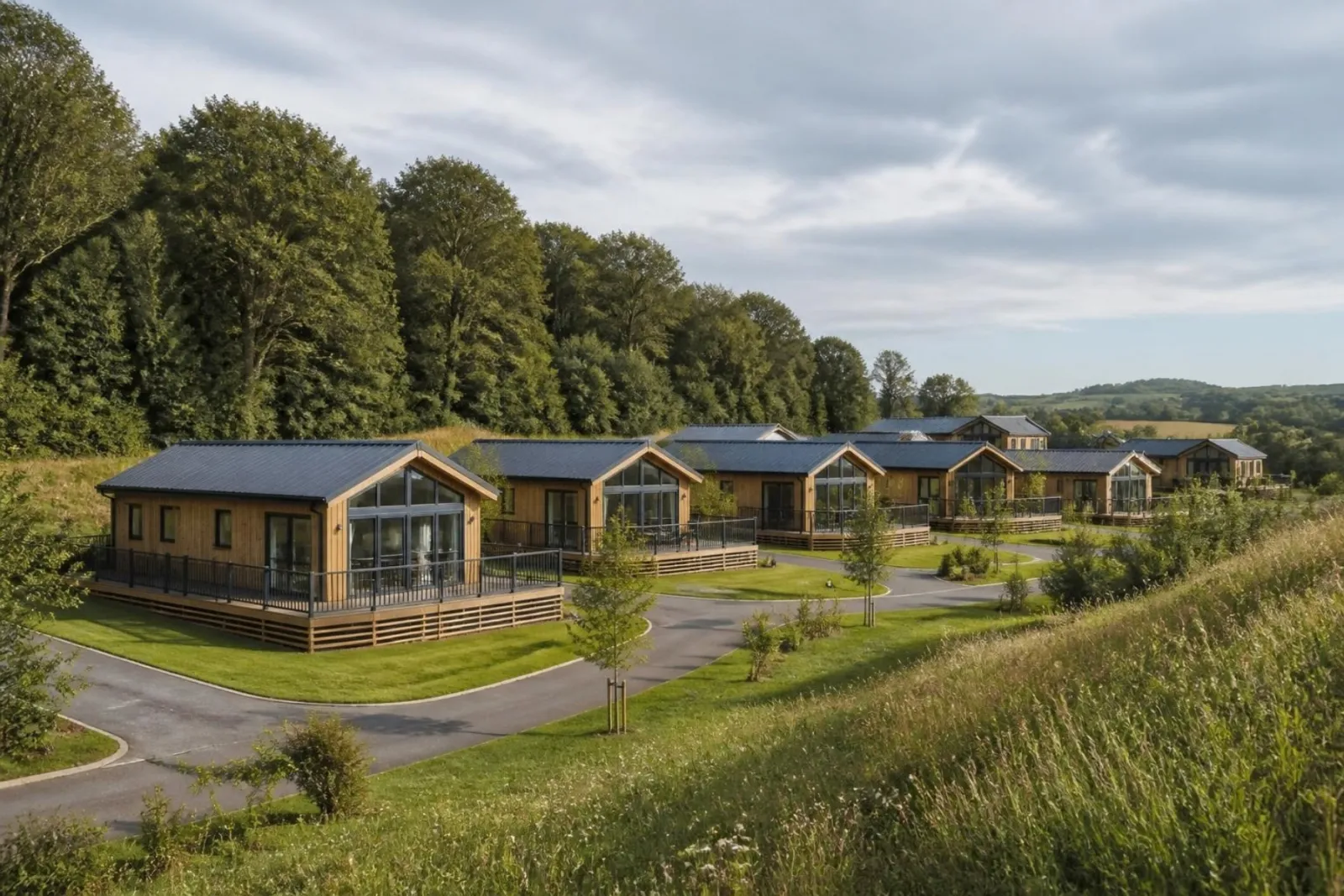
A holiday park deposit is the equity you put into the deal yourself, with a park acquisition mortgage covering the rest. Because a park is a trading business financed on a commercial basis, the figure is larger than a homebuyer expects: park lenders lend against the earnings and the asset, not a residential loan to value, and they want a meaningful equity stake in the deal. In our experience most park lenders work to around 50 to 65 per cent of value, which puts the typical deposit and equity contribution at roughly 35 to 50 per cent.
This guide explains how much deposit a holiday park needs, what pushes the loan to value up or down, how buyers raise the equity, and the other costs to budget for alongside it. We arrange holiday park finance as a broker and introducer, not a lender, and this is general information rather than advice.
How much deposit does a holiday park need?
As a working assumption, plan for a deposit and equity contribution of around 35 to 50 per cent of the park's value. That reflects the loan to value most park lenders work to, typically in the region of 50 to 65 per cent on a commercial basis, with the strongest cases (good tenure, durable pitch-fee income, experienced management) supporting the higher end of the lending range and weaker cases the lower end. As a deliberately illustrative example, on a park valued at 2 million pounds, a 60 per cent loan to value would mean borrowing 1.2 million pounds and finding 800,000 pounds of equity, before any of the other costs.
The deposit is not the only capital you need. On a park you also have to budget for stamp duty or the relevant land transaction tax, which on a commercial property of this size is significant, plus legal and professional fees that are higher than a residential purchase because of the due diligence involved, the valuation, and crucially working capital to run the business and often to fund stock. Underestimating the cash needed beyond the deposit is one of the more common planning mistakes, because a park has to keep trading from day one.
What pushes the loan to value up or down?
Several factors move the loan to value a lender will offer. The strength and durability of the earnings comes first: a park with substantial recurring pitch-fee income, well-evidenced in the accounts, supports more borrowing than one that relies heavily on lumpy caravan-sales profit. Tenure is central: freehold or long leasehold supports a higher loan to value than a short or restrictive lease. The licence and planning position matter, because a twelve-month holiday park with room to grow is a stronger asset than one closed half the year or built out.
Location, condition and the buyer all feed in too. A well-located park in a recognised staycation area, in good physical order, with experienced management going in, presents a stronger case than a tired park in a secondary location bought by a first-time operator. The single biggest lever is usually the quality of the income evidence and the EBITDA the deal rests on, which is precisely the packaging work we do as a broker: presenting the earnings, tenure and management clearly so the lender can offer the strongest terms the park supports.
Can you raise the equity from other assets?
Many park buyers do not fund the equity purely from cash. If you own other property or another park with equity in it, you can often release some of that equity to contribute to the purchase, either by refinancing the existing asset onto a facility that releases cash, or by taking a short-term bridge against it. Existing park operators commonly grow this way, refinancing a stabilised park to fund the deposit on the next, and investors with a wider property base draw on that to enter the sector.
Each route has a cost and a risk. Releasing equity increases the borrowing secured on the existing asset, and a bridge carries higher interest until it is repaid, so the combined position has to be modelled honestly against the new park's earnings. We arrange both the equity-release refinance and the park acquisition finance together, so the whole structure is priced before you commit. Operators building a multi-park group this way often use our park portfolio finance alongside the single-park purchase, and the wider commercial picture can run through our colleagues at Commercial Mortgages Broker.
What other costs sit alongside the deposit?
Beyond the deposit and equity, build a realistic day-one budget. Stamp duty or the relevant land transaction tax is usually the largest single extra on a park of any size, so confirm the current commercial rates for the relevant UK nation, as Scotland and Wales operate their own land taxes. Then add legal fees, which are higher than a house purchase because of the business, licence and tenure work, the lender's specialist valuation and your own surveys, accountancy and due diligence costs, and mortgage arrangement and broker fees.
Working capital is the cost park buyers most often underestimate. A park is a live trading business that needs cash to run from completion, to fund staff, utilities, maintenance and marketing, and frequently to buy stock, the static caravans and lodges a developing park sells on at a margin. Stock funding can be substantial on a park with active sales, and is sometimes financed separately. Allow a buffer for the transition under new ownership too. Our how to buy a holiday park guide sets the deposit in the context of the whole purchase, and the deposit and loan to value calculator on this site lets you model different scenarios.
Holiday park deposits and loan to value: common questions
What loan to value can I get on a holiday park?
Park lenders typically work to around 50 to 65 per cent of value on a commercial basis, so plan for a deposit and equity contribution of roughly 35 to 50 per cent. The strongest cases, with good tenure, durable pitch-fee income and experienced management, support the higher end of the lending range, while weaker tenure or earnings pull it down.
Why is the deposit on a park bigger than on a house?
Because a park is a trading business financed commercially on its earnings, not a home financed on a residential loan to value. Lenders want a meaningful equity stake to reflect the trading risk, the tenure and the licence, so loan to values of around 50 to 65 per cent are normal, meaning a larger deposit than a residential buyer would expect.
Can I use equity from another property or park as the deposit?
Often, yes. Buyers commonly release equity from an existing property or park, by refinancing it or taking a short-term bridge against it, and use that towards the purchase. It increases the borrowing on the existing asset, so the combined position should be modelled carefully. We arrange both sides together.
How much do I need in total to buy a park, not just the deposit?
Alongside the deposit and equity, budget for stamp duty or the relevant land transaction tax, legal, valuation, survey and accountancy fees, mortgage and broker costs, and working capital to run the business and often to fund caravan stock. The extras and working capital can add a substantial sum, so plan for the full figure from the start.
Ready to talk about a real deal?
Send us the deal and we will come back with a view on fundability and likely terms within one working day.