Can you get a mortgage on a holiday lodge?
Can you get a mortgage on a holiday lodge? For most lodges on holiday parks the honest answer is no, not a standard mortgage. That surprises many buyers, partic
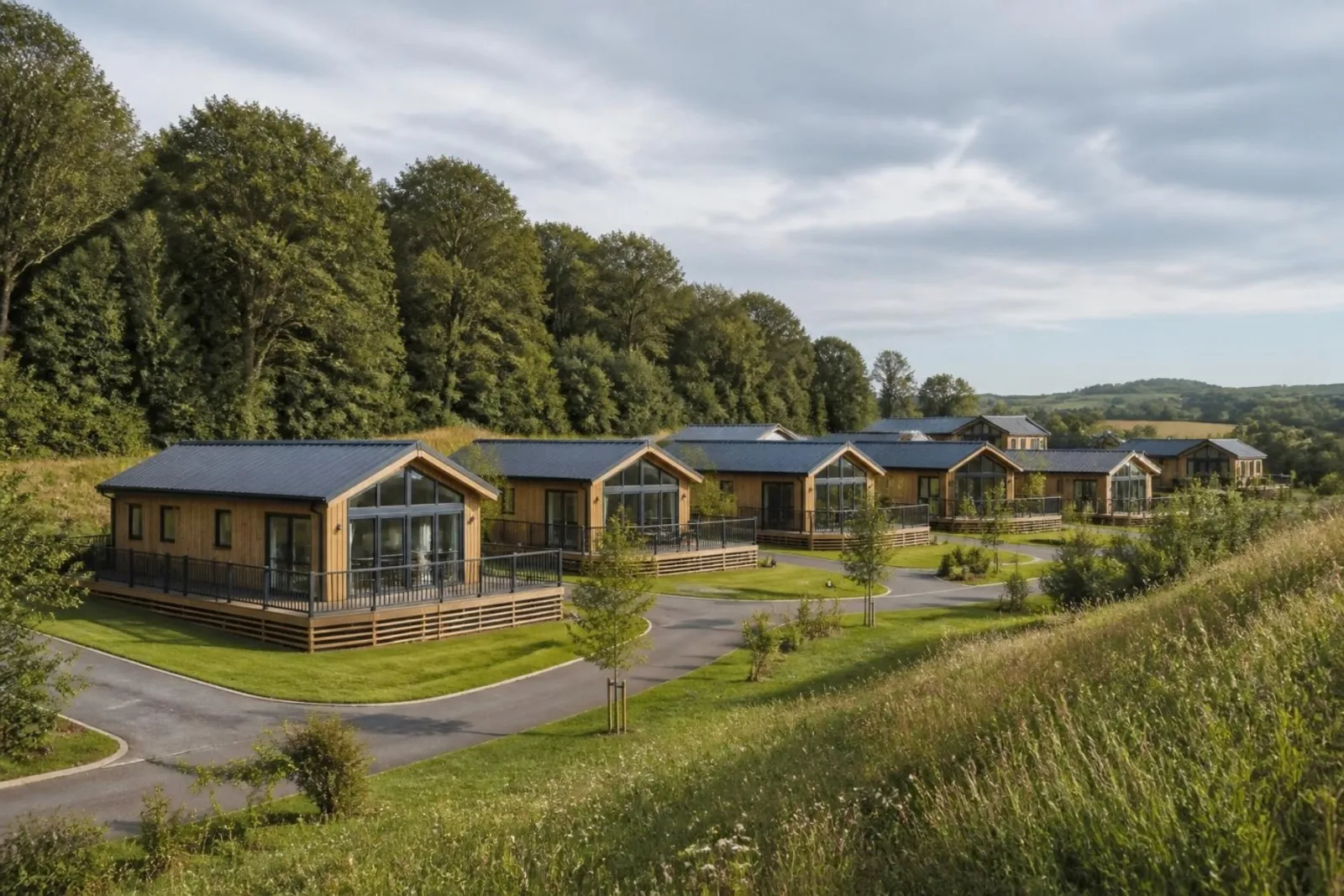

Can you get a mortgage on a holiday lodge? For most lodges on holiday parks the honest answer is no, not a standard mortgage. That surprises many buyers, particularly when the lodge is a large, well-built timber home costing as much as a small house. The reason is legal rather than financial: a lodge on a park is usually a caravan in law, a piece of movable property sitting on a pitch that somebody else owns, and a mortgage needs land to attach to.
This guide explains why, what finance can be used instead, why the length of your site agreement matters to any lender, and the exceptions where a lodge can be mortgaged. We are a finance broker for holiday parks and leisure businesses. We are not authorised or regulated by the FCA and we handle only non-regulated finance, so if you are buying a lodge for yourself or your family, the finance is usually regulated and we refer that enquiry to an FCA-authorised firm. This is general information, not advice.
Why most holiday lodges are chattels, not property
In English law, land and anything permanently fixed to it is real property. Things that can be moved are personal property, or chattels. Most holiday lodges on parks are designed to meet the legal definition of a caravan in the Caravan Sites and Control of Development Act 1960, as extended by the Caravan Sites Act 1968 to twin-unit structures built in no more than two sections and capable of being moved as a whole once assembled, within maximum dimensions set by the Act. They sit on a base rather than foundations and are connected to services, but they are not part of the land.
When you buy one, what you usually get is ownership of the unit plus a contractual licence to keep it on a particular pitch for a period, on the park's terms. The park owner keeps the freehold. That is why a lodge sits on a caravan site licence issued by the local authority rather than being registered at HM Land Registry, and why it usually has no title for a lender to hold a charge over. Buyers sometimes see lodges advertised with long-sounding tenures, but a long licence is still a contractual right, not an interest in land.
What mortgage lenders look for, and why lodges fall short
A mortgage lender wants security it can register, value on comparable sales, insure and, if the worst happens, sell to recover the loan. A lodge on a park struggles on each count. There is no registered title to charge. Values tend to fall with age, much like a vehicle, rather than tracking house prices. The lodge can generally only be sold on the park where it sits, often with the park's approval or involvement. And the right to keep it there may end, or the park may require it to be replaced, once it reaches a certain age.
Occupancy is the other issue. Holiday park licences usually restrict use to holidays and bar anyone from living in the unit as their main home, often requiring owners to show a permanent address elsewhere. Residential mortgage products are built around a home you live in, and buy-to-let products around a let dwelling on its own title, so a holiday lodge on a park fits neither. None of this means a lodge is a bad purchase. It means the finance has to come from somewhere else.
So how do you finance a lodge?
Buyers of lodges for personal use generally choose between four routes. The first is specialist lodge or caravan finance, often arranged through the park or the dealer when you buy. This is commonly a hire purchase or similar agreement secured on the unit itself, so the lodge can be repossessed if payments are missed. The second is a secured loan against property you already own, through a remortgage of your home or a second charge loan. The third is an unsecured personal loan for smaller amounts. The fourth, and still common, is cash, perhaps from savings, an inheritance or downsizing.
Each has consequences. Borrowing against your home may carry a lower rate but puts your home at risk and can stretch the debt over many years, which may mean paying more interest overall and still owing money after the lodge has lost much of its value. Unit-secured lodge finance is quick to arrange but ties you to the terms on offer at the point of sale, so it is worth comparing independently. Unsecured loans are simpler but usually shorter and more expensive. All of these are regulated consumer products when the lodge is for personal use, so they must be arranged by FCA-authorised firms. We refer those enquiries on rather than arranging them ourselves.
The site agreement term: why it matters to lenders
The single most important document after the purchase contract is the site agreement or licence. It sets how long the lodge can stay on its pitch, the annual pitch fee and how it is reviewed, whether the park can require the lodge to be removed or upgraded when it reaches a certain age, any restrictions on selling privately and any commission the park takes, and whether you can let the lodge out. Terms vary widely from park to park, and even between lodges on the same park.
For anyone lending against a lodge, the remaining length of that agreement sets a ceiling. A loan that runs longer than the lodge is allowed to stay on the park, or longer than the unit is likely to hold its value, is a risk for both lender and borrower. Some buyers search for lodge finance over 20 years or similar long terms. Before taking any long term, check the remaining licence period, the park's policy on older units, and what happens to the loan if the lodge has to be moved or sold. Your solicitor should review the agreement before you commit.
When a lodge can be mortgaged
There are exceptions. A lodge or cabin built as a permanent structure on its own freehold or long leasehold plot, with planning permission as a dwelling, may be mortgageable like a house if it meets a lender's construction and occupancy criteria. Some lodges on smaller developments are sold with a long lease of the plot itself, registered at HM Land Registry, and a specialist lender may consider those. Holiday-let restricted properties with their own title, such as a converted barn or a cottage, are sometimes financed with holiday let mortgages, which are a separate market from lodges on parks.
The test is always what the buyer actually acquires. If there is a registered title to land, a mortgage may be possible. If the purchase is a unit on a pitch under a park licence, it will almost certainly be chattel finance or funding raised elsewhere. Your conveyancer can confirm which applies before you commit to a finance route.
Business buyers: lodges as part of a park
The picture is different when lodges are bought as a business. A park operator adding lodges to let or to sell, an investor buying a lodge park or a group of pitches, or a developer building a new lodge site, is borrowing for business purposes. That lending is generally outside consumer credit and mortgage regulation, and it is typically assessed on the park or the business: the freehold, the site licence and planning, the pitch fee income and the trading record.
That is the finance we arrange directly, as a broker and introducer to specialist leisure and commercial lenders, not as a lender. Our lodge development finance and park acquisition finance pages explain how those loans are structured, and our guide to buying a lodge as an investment covers the letting side for individual buyers.
Can you get a mortgage on a holiday lodge?: common questions
Can I get a mortgage to buy a lodge on a holiday park?
Generally not a standard mortgage. A lodge on a holiday park is usually a caravan in law, so you buy the unit and a licence to keep it on the pitch, not the land. Without a registered title there is nothing for a mortgage to be secured on. Buyers usually use lodge finance secured on the unit, a loan secured on other property, a personal loan or cash.
Why won't mortgage lenders lend on holiday lodges?
Because most lodges on parks are movable chattels without their own title, their values tend to fall with age, they can usually only be sold on the park where they sit, the site licence is time limited, and occupancy is restricted to holidays. Those features do not fit residential or buy-to-let mortgage criteria.
Can I remortgage my house to buy a holiday lodge?
Many people do release equity from their home to buy a lodge. It is a regulated mortgage decision, so it must be arranged through an FCA-authorised firm, and it puts your home at risk if repayments are not kept up. We are not FCA-authorised and refer personal enquiries of this kind to an authorised firm.
How long can lodge finance run for?
It depends on the lender, the age of the lodge and the terms of the site agreement. Whatever the product allows, it is sensible to avoid a term longer than the lodge can remain on its pitch or longer than it is likely to hold meaningful value. Check the remaining licence term and the park's policy on older units first.
Can a limited company get finance to buy holiday lodges?
Yes, where the lodges are bought as a business or investment, finance is typically non-regulated and assessed on the business case and security. That is the kind of lodge finance we arrange directly, for example for park operators, lodge park developers and investors.
Ready to talk about a real deal?
Send us the deal and we will come back with a view on fundability and likely terms within one working day.