Holiday lodge finance: how to fund a lodge, static caravan or park home
Holiday lodge finance is one of the most searched and least understood corners of property lending. People looking to buy a lodge, a static caravan or a residen
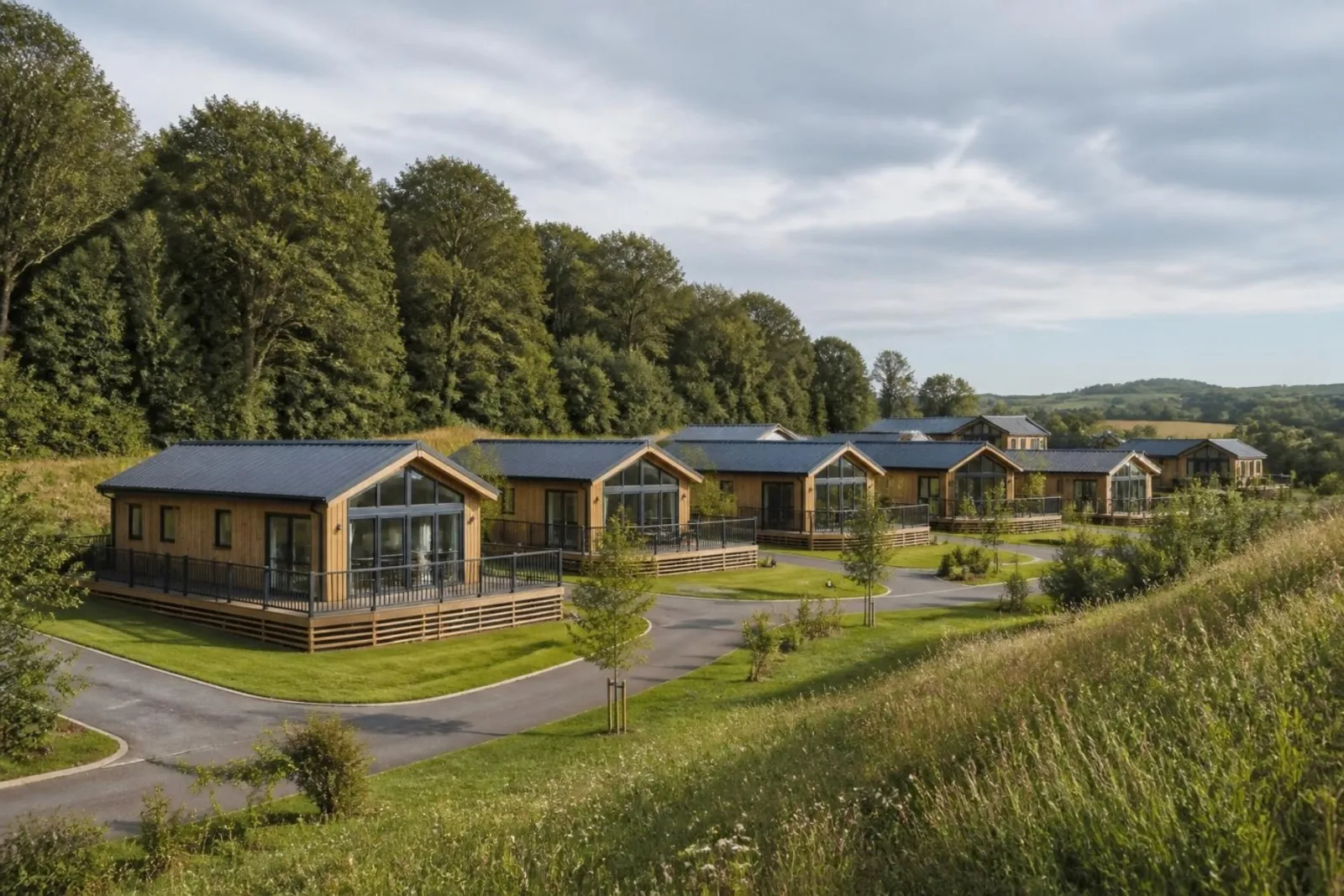

Holiday lodge finance is one of the most searched and least understood corners of property lending. People looking to buy a lodge, a static caravan or a residential park home often start by asking for a mortgage, only to find that the usual mortgage lenders will not look at it. That is not because the purchase is unusual or risky in itself. It is because, in law, most lodges, static caravans and park homes are not land at all. They are caravans: movable homes that sit on a pitch owned by someone else, the park owner. A mortgage is a charge over land, so without land there is nothing for a standard mortgage to attach to.
This guide explains how a lodge, static caravan or park home is actually financed: why the legal status matters, the routes people use instead of a mortgage, how the site or pitch agreement and the annual fees fit into the numbers, and when the purchase is a regulated consumer matter rather than a business one. We should be clear about our own position from the start. We are a finance broker for holiday parks and leisure businesses. We are not authorised or regulated by the Financial Conduct Authority (FCA) and we handle only non-regulated finance. Where a lodge, caravan or park home is being bought for you or your family to use, the finance is usually regulated, and we refer that enquiry to an appropriately FCA-authorised firm. Where lodges or pitches are being bought as a business or investment, that is where we arrange finance directly. Nothing here is financial, legal or tax advice.
Lodge, static caravan or park home: what are you buying?
The three terms overlap, and the differences matter for finance. A static caravan is the familiar holiday home on a caravan park, factory built and delivered to its pitch. A holiday lodge is usually a larger, more house-like unit, often timber clad with a pitched roof and a deck, but many lodges are still built to the legal definition of a caravan. That definition comes from the Caravan Sites and Control of Development Act 1960, extended by the Caravan Sites Act 1968 to cover twin-unit homes that are constructed in no more than two sections and can be moved as a whole once assembled, within set maximum dimensions. A unit that meets that definition is a caravan in law however it looks, which is why so many luxury lodges sit on caravan site licences rather than being sold as houses.
A park home is a caravan used as someone's only or main residence on a protected residential site. Park homes are covered by the Mobile Homes Act 1983, which gives residents security of tenure and a statutory framework for pitch fees and sales. Holiday lodges and static caravans on a holiday park are not covered by that Act in the same way, because they are not residences: the site licence and planning permission usually restrict them to holiday use, and the owner's rights come from the contract with the park, often called a licence agreement or holiday home agreement.
Some holiday lodges are different again. A small number are built as permanent structures on their own freehold or long leasehold plot with planning consent as dwellings or holiday lets. Those are real property and can sometimes be mortgaged in the ordinary way. The first job, before anything else, is to establish which of these you are actually buying, because the answer determines every finance option that follows.
Why a standard mortgage rarely fits
A mortgage is a loan secured by a legal charge over land and buildings registered at HM Land Registry. When you buy a lodge or static caravan on a park, you normally buy the unit itself and a contractual right to keep it on a pitch for a period. You do not buy the ground underneath. The unit is a chattel, a piece of movable personal property like a car or a boat, and it cannot be registered or charged in the way a house can. That is the simple reason most high street and specialist mortgage lenders decline lodges and caravans on parks.
Two further features make lenders cautious. The first is that caravans and many lodges tend to lose value over time, much like a vehicle, rather than tracking the property market. The second is that the right to keep the unit on the park is time limited and conditional. A lodge with a long remaining term on its site agreement is a very different proposition from one where the park can require the unit to be removed or replaced within a few years. Our guide on whether you can get a mortgage on a holiday lodge covers this in more depth.
How do people finance a holiday lodge?
Because a lodge is usually a chattel, the finance used to buy one looks more like vehicle or asset finance than a mortgage. The main routes people use are these. Specialist lodge and caravan finance, often hire purchase or a conditional sale style agreement, is offered through many parks and dealers at the point of sale, secured on the unit itself. A personal loan, unsecured, can fund a smaller purchase or top up savings. A loan secured on other property, such as a remortgage or a second charge on your own home, can release equity to buy the lodge outright, with the risk that your home is on the line if repayments are missed. And many buyers simply use cash, sometimes from downsizing.
Each route has trade offs. Park-arranged finance is convenient but ties the loan to one seller's offer, so it is worth comparing it with independent options before you sign. Borrowing against your home may cost less per year but usually runs for longer, which can mean paying more in total, and it converts a depreciating purchase into a debt secured on your main residence. Our static caravan finance guide compares park-arranged and independent routes in detail. If you are considering any of these for a personal purchase, you should speak to an FCA-authorised adviser or lender, which is where we refer such enquiries.
Regulated or not? Personal use against business use
This is the question that decides who can help you. Credit to buy a lodge, static caravan or park home for you or your family to use is, in most cases, a regulated consumer credit agreement under the Consumer Credit Act 1974 and the FCA's rules, and a loan secured on your home is usually a regulated mortgage contract. Only firms authorised by the FCA for the relevant activity can arrange or advise on that finance. We are not authorised or regulated by the FCA, so we do not arrange or advise on regulated consumer finance. What we can do is explain how the options work, as this guide does, and where a purchase needs regulated finance, refer the enquiry to an appropriately authorised firm.
Business and investment purchases are different. A park operator buying lodges to let, an investor acquiring a block of pitches, a company funding a new lodge development, or a leisure business refinancing units it owns and lets, are borrowing for business purposes. Lending of that kind is generally outside consumer credit and mortgage regulation, and it is the finance we arrange directly across specialist leisure and commercial lenders, as a broker and introducer rather than a lender. If you are unsure which side of the line a purchase falls, tell us what you are buying and why, and we will say plainly whether we can help or where to go instead.
The site agreement and the fees are part of the price
Buying a lodge or caravan is only the start of the cost. Every unit on a park pays an annual pitch fee, also called a site fee or ground rent, and usually rates, water, insurance and service charges on top. On a holiday park these fees are set by the contract and reviewed by the park each year. On a residential park home site, pitch fee reviews follow the Mobile Homes Act 1983, and in England the presumed annual change has been linked to the Consumer Prices Index (CPI) since the Mobile Homes (Pitch Fees) Act 2023 came into force on 2 July 2023. Our pitch fees guide explains the rules and what the fees cover.
The site agreement also sets how long the unit can stay on the park, whether the park can ask for it to be replaced once it reaches a certain age, any restrictions on selling it privately, and whether you can let it out. These terms shape affordability and resale value as much as the price does. Any lender, regulated or not, will want to see the agreement, and a finance term that runs longer than the unit can stay on its pitch is a warning sign.
Holiday home or park home: the rules differ
It is easy to assume a lodge on a park is the same as a park home, but the legal position is very different. A park home that is your main residence on a protected site is covered by the Mobile Homes Act 1983. The Act gives you a written statement of terms, security of tenure, a regulated process for pitch fee reviews, and the right to sell or gift the home on the site, with the site owner entitled to commission on a sale. Under the Mobile Homes (Commissions) Order 1983 that commission is capped at 10 per cent of the sale price.
A holiday lodge or static caravan on a holiday park has none of those statutory protections. You cannot live in it as your main home, the licence usually requires you to prove you have a permanent address elsewhere, and your rights depend on the contract with the park. That affects finance too: lenders who deal with residential park homes look at the Mobile Homes Act framework, while holiday home finance focuses on the unit, the licence term and the park. Our park home finance guide covers residential homes separately.
Buying lodges as an investment or business
Many enquiries about lodge finance are really investment questions: can a lodge be let out to cover its costs, and how is a lodge bought as a business? Letting income depends heavily on the park's rules. Many parks either prohibit private letting or require owners to let through the park's own letting scheme, taking a commission. Against that income sit the pitch fee, cleaning, insurance, utilities and the unit's depreciation. Our guide to buying a lodge as an investment works through the numbers, and the holiday let calculator on this site lets you test a scenario.
Where the buyer is a business, for example a park operator adding lodges, an investor acquiring several units or pitches, or a developer building out a lodge park, the finance is non-regulated and is where we work. Lodge park development, acquisition of parks with lodges already sited, and refinancing of let lodge portfolios are all funded on the trading case and the value of the park, not as consumer loans. If that describes your purchase, send us the outline and we will come back with a view on fundability.
Holiday lodge finance: common questions
Can you get a mortgage on a holiday lodge?
Usually not a standard mortgage. Most holiday lodges on parks are caravans in law, movable chattels on a pitch the park owns, so there is no land for a mortgage to be secured against. Buyers typically use specialist lodge finance, a loan secured on other property, an unsecured loan or cash. A lodge built as a permanent dwelling on its own freehold plot is the exception and may be mortgageable.
Does your firm arrange finance for a lodge I want to use myself?
No. We are not authorised or regulated by the FCA and we only handle non-regulated finance. Finance for a lodge, caravan or park home for personal or family use is usually regulated consumer credit or a regulated mortgage, so we refer those enquiries to an appropriately FCA-authorised firm. We arrange finance directly where lodges or pitches are bought as a business or investment.
How can I finance a holiday lodge purchase?
The common routes are finance arranged through the park or dealer, often hire purchase secured on the unit, an unsecured personal loan, releasing equity from your home through a remortgage or second charge, or cash. Compare the total cost, the term and what is at risk if you cannot pay, and make sure any finance term does not outlast the site agreement.
What is the difference between a park home and a holiday lodge?
A park home is a caravan used as a main residence on a protected residential site, covered by the Mobile Homes Act 1983 with security of tenure and regulated pitch fee reviews. A holiday lodge is restricted to holiday use by the site licence and planning permission, and the owner's rights come from the contract with the park rather than that Act.
Is there a holiday lodge finance calculator?
Our loan repayment calculator will show the monthly cost of a loan over a given term and rate, and our holiday let calculator models letting income against costs for a lodge you plan to let. Both are illustrations only. For a personal purchase, the lender or FCA-authorised broker will give you the actual cost of any regulated agreement.
Ready to talk about a real deal?
Send us the deal and we will come back with a view on fundability and likely terms within one working day.